AI Chatbot Pricing Models: Complete Cost Guide for 2026
Understand AI chatbot pricing structures, hidden costs, and ROI calculations. Compare subscription vs. custom development, usage-based fees, and enterprise pricing.

Choosing the right AI chatbot solution involves more than just picking features—you need to understand the ai chatbot pricing models available and how they align with your business needs and budget. With options ranging from free DIY platforms to enterprise custom solutions costing hundreds of thousands, navigating chatbot pricing can be overwhelming.
This comprehensive guide breaks down everything you need to know about AI chatbot costs in 2026.
What Determines AI Chatbot Pricing?
Before diving into specific pricing models, it's important to understand the factors that influence cost:
1. Deployment Model
- SaaS/Cloud-hosted: Pay monthly or annually, minimal setup costs
- On-premise: Higher upfront investment, lower ongoing costs
- Hybrid: Combines cloud flexibility with on-premise security
2. Feature Complexity
- Basic: Rule-based responses, simple FAQ handling
- Intermediate: NLP, intent recognition, basic integrations
- Advanced: Multi-channel support, AI learning, complex workflows, sentiment analysis
- Enterprise: Custom AI models, advanced security, dedicated support
3. Usage Volume
Most platforms price based on:
- Number of conversations per month
- Messages sent/received
- Active users
- API calls to AI models
4. Integration Requirements
Connecting your chatbot to existing systems adds cost:
- CRM integration (Salesforce, HubSpot)
- E-commerce platforms (Shopify, WooCommerce)
- Customer support tools (Zendesk, Intercom)
- Payment processors
- Custom APIs and databases
5. Customization Level
- Template-based: Lowest cost, limited flexibility
- Low-code customization: Moderate cost, good balance
- Custom development: Highest cost, unlimited possibilities
Common AI Chatbot Pricing Models
1. Freemium Model
How it works: Free basic tier with limited features, paid upgrades for advanced capabilities.
Typical free tier limitations:
- 50-500 conversations/month
- Single channel (usually web chat only)
- Basic analytics
- Community support only
- Platform branding required
Paid tiers start at: $15-$50/month
Best for: Small businesses testing chatbots, personal projects, MVPs
Examples: Tidio ($29/month), Chatfuel (free up to 50 users), ManyChat (free up to 1,000 contacts)
Pros:
- Low barrier to entry
- Test before committing budget
- Quick setup
Cons:
- Limited scalability
- Feature restrictions can hinder growth
- Often lack advanced AI capabilities
2. Subscription (Per-User/Per-Agent)
How it works: Fixed monthly or annual fee per user seat or agent account.
Typical pricing tiers:
- Starter: $50-$100/month (1-2 agents, basic features)
- Professional: $200-$500/month (5-10 agents, advanced features)
- Business: $500-$1,500/month (unlimited agents, full features)
Best for: Companies with predictable agent needs, customer support teams
Examples: Intercom ($74/seat/month), Zendesk Chat ($59/agent/month)
Pros:
- Predictable costs
- Simple to understand
- Scales with team size
Cons:
- Can become expensive as team grows
- Paying for capacity you might not fully use
3. Usage-Based (Pay-Per-Conversation)
How it works: Pay based on actual chatbot usage—conversations, messages, or AI API calls.
Typical pricing:
- $0.01-$0.10 per conversation
- $0.001-$0.01 per message
- Bundled conversation packs (e.g., $99 for 10,000 conversations)
Best for: Businesses with fluctuating traffic, seasonal demand, efficient chatbot use
Examples: Dialogflow ($0.002/request after free tier), AWS Lex ($0.004/voice request, $0.00075/text request)
Pros:
- Only pay for what you use
- Cost-effective for low to moderate volume
- Scales automatically
Cons:
- Unpredictable monthly costs
- Can become expensive at high volume
- Requires careful usage monitoring
4. Platform/Channel-Based
How it works: Pricing varies based on which channels you deploy your chatbot (web, mobile app, WhatsApp, Facebook Messenger, etc.).
Typical structure:
- Base price for web chat: $50-$200/month
- Additional channels: $25-$100/channel/month
- Premium channels (WhatsApp Business API): Higher fees
Best for: Omnichannel customer engagement strategies
Pros:
- Flexible deployment
- Start simple, expand as needed
Cons:
- Costs add up quickly with multiple channels
- Complex pricing can be hard to predict
5. Custom Enterprise Pricing
How it works: Negotiated contracts based on specific business requirements, volume commitments, and service levels.
Typical range: $10,000-$500,000+ annually
Includes:
- Custom AI model development
- Dedicated infrastructure
- White-label solutions
- Premium support (SLA guarantees)
- Training and onboarding
- Security and compliance features
Best for: Large enterprises, regulated industries, complex custom requirements
Examples: IBM Watson Assistant (custom pricing), Microsoft Bot Framework (Azure-based pricing)
Pros:
- Fully customized to needs
- Dedicated support
- Maximum control and security
Cons:
- High upfront investment
- Long procurement cycles
- Requires internal technical expertise
For guidance on enterprise AI implementation, check our enterprise AI implementation guide.
Hidden Costs to Consider
Beyond the base platform fees, factor in:
Development and Setup
- Design and conversation flow: $2,000-$20,000
- Integration development: $5,000-$50,000 depending on complexity
- Training data collection and labeling: $1,000-$10,000
- Testing and QA: $2,000-$15,000
Ongoing Maintenance
- Content updates and improvements: 5-10 hours/month
- Performance monitoring and optimization: 3-5 hours/month
- Retraining AI models: Quarterly or as needed
- Bug fixes and technical updates: As required
Third-Party Services
- LLM API costs (if using OpenAI, Anthropic, etc.): $0.002-$0.06 per 1,000 tokens
- Analytics and monitoring tools: $50-$500/month
- Cloud hosting (if self-hosted): $100-$2,000/month depending on scale
- SMS/WhatsApp messaging fees: $0.005-$0.10 per message
Training and Support
- Staff training: $500-$5,000 one-time
- Ongoing support: Included in some plans, extra in others
- Consulting and optimization: $150-$300/hour
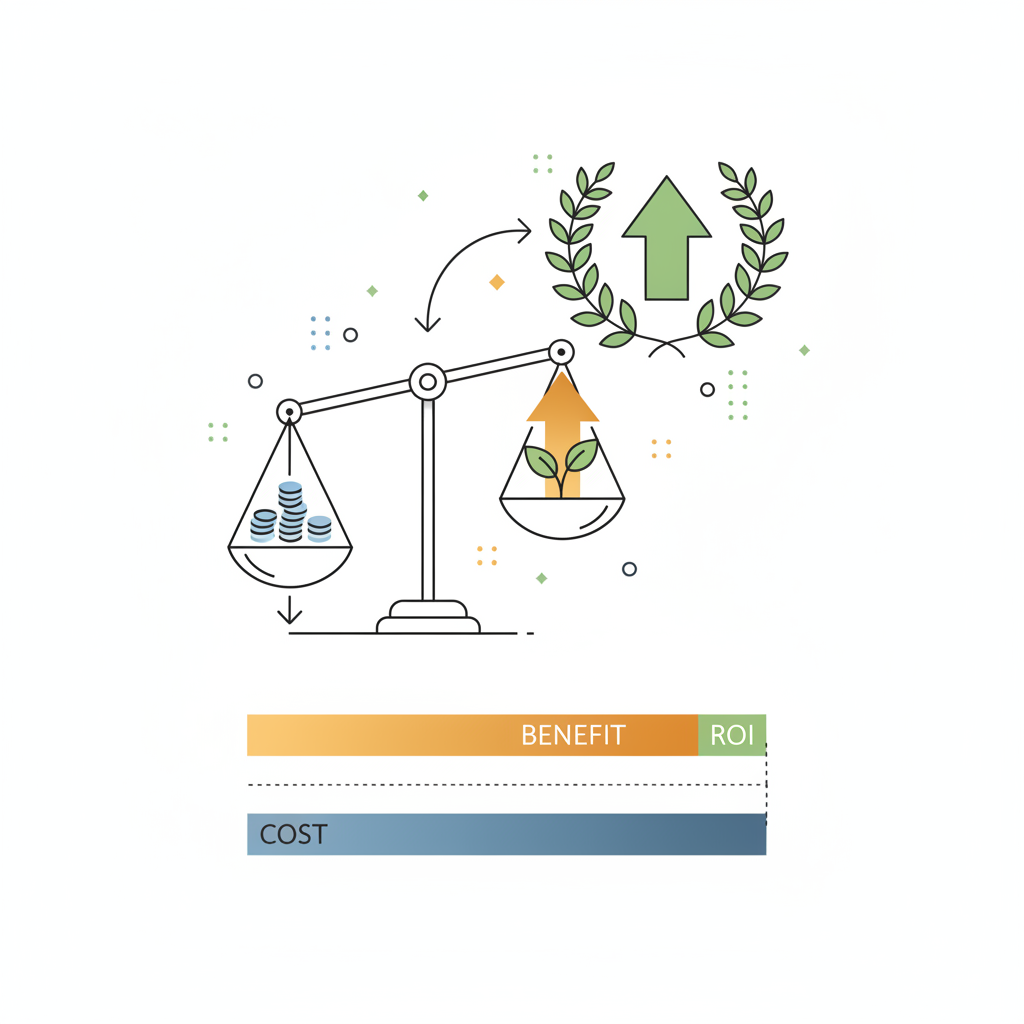
ROI: How to Calculate Chatbot Value
To determine if a chatbot investment makes sense, calculate the potential return:
Cost Savings
Customer support:
- Average cost per human support ticket: $15-$25
- Chatbot cost per automated resolution: $0.50-$2
- If automating 1,000 tickets/month: Save $13,000-$23,000/month
Sales and lead qualification:
- Cost per sales-qualified lead (human): $100-$200
- Cost per SQL (chatbot-assisted): $20-$50
- If qualifying 100 leads/month: Save $5,000-$15,000/month
Revenue Impact
- 24/7 availability: Capture leads outside business hours (20-30% more conversions)
- Faster response times: Reduce bounce rate by 15-25%
- Personalized recommendations: Increase average order value by 10-20%
- Reduced cart abandonment: Recover 5-10% of abandoned carts
Payback Period
Typical chatbot implementations see ROI within 3-9 months for customer support use cases, 6-18 months for sales and marketing applications.
Learn more about identifying high-ROI automation opportunities in our AI automation workflow examples guide.
Comparing Popular Chatbot Platforms
Budget-Friendly Options (Under $100/month)
Tidio — $29-$289/month
- Good for small e-commerce sites
- Live chat + chatbot hybrid
- Limited AI capabilities at lower tiers
Chatfuel — Free-$149/month
- Facebook/Instagram focus
- Visual bot builder
- Basic NLP
ManyChat — Free-$145/month
- Strong for social media messaging
- Marketing automation focus
- User-friendly interface
Mid-Range Platforms ($100-$1,000/month)
Drift — $2,500/month minimum
- B2B sales focus
- Advanced lead routing
- Strong CRM integrations
Intercom — $74-$395/seat/month
- All-in-one customer messaging
- Excellent help desk features
- Custom bot builder
HubSpot Chatbot — Included in Marketing Hub ($800+/month)
- Tight HubSpot CRM integration
- Good for inbound marketing
- Limited standalone functionality
Enterprise Solutions ($1,000+/month or custom)
IBM Watson Assistant — Custom pricing
- Highly customizable NLP
- Strong for complex enterprise use cases
- Steep learning curve
Salesforce Einstein Bots — Part of Service Cloud ($150+/user/month)
- Native Salesforce integration
- Good for large support teams
- Requires Salesforce ecosystem
Microsoft Bot Framework — Usage-based Azure pricing
- Maximum flexibility and control
- Developer-focused
- Requires significant technical resources
Building vs. Buying: Cost Comparison
Option 1: SaaS Platform (Buy)
Upfront costs: $0-$5,000 (setup and customization) Monthly costs: $50-$500 Time to launch: 1-4 weeks Technical expertise required: Low
Best for: Quick deployment, standard use cases, limited technical resources
Option 2: Low-Code Platform with Custom Development
Upfront costs: $10,000-$50,000 (custom features and integrations) Monthly costs: $200-$1,000 Time to launch: 2-3 months Technical expertise required: Moderate
Best for: Specific business requirements, existing tech stack integration, growth plans
Option 3: Fully Custom Build
Upfront costs: $50,000-$500,000+ (development, infrastructure, testing) Monthly costs: $1,000-$10,000 (hosting, maintenance, AI APIs) Time to launch: 4-12+ months Technical expertise required: High
Best for: Unique competitive advantage, complex requirements, regulatory constraints, long-term strategic investment
For guidance on building custom AI systems, see our conversational AI development guide.
How to Choose the Right Pricing Model
Ask yourself:
1. What's your conversation volume?
- Low (<1,000/month): Freemium or low-tier subscription
- Medium (1,000-10,000/month): Subscription or usage-based
- High (>10,000/month): Usage-based or enterprise
2. How predictable is your usage?
- Predictable: Subscription provides cost certainty
- Variable/seasonal: Usage-based scales with demand
3. What's your growth trajectory?
- Testing/early stage: Start with freemium, upgrade as validated
- Rapid growth: Usage-based or enterprise with volume discounts
- Established: Subscription or custom contract
4. What technical resources do you have?
- Limited: SaaS with managed service and support
- Moderate: Low-code platform with agency support
- Strong internal team: Open-source or custom build
5. What's your budget?
- <$500/month: Freemium or low-tier SaaS
- $500-$5,000/month: Professional SaaS or low-code with custom development
- $5,000+/month: Enterprise solutions or fully custom
Negotiating Better Chatbot Pricing
For SaaS Platforms:
- Annual vs. monthly: Save 15-30% with annual commitment
- Volume discounts: Ask for breaks at conversation thresholds
- Multiple channels: Bundle discounts for omnichannel deployment
- Early-stage discount: Startups often qualify for 20-50% off
For Custom Development:
- Phase the project: Start with MVP, expand in stages
- Fixed-price vs. time-and-materials: Fixed price for scope certainty
- Negotiate support terms: Clarify what's included in maintenance
- Retain IP rights: Ensure you own the code and training data
Red Flags to Watch For:
- Unclear overage charges
- Long-term lock-in contracts without clear exit terms
- Hidden integration or API fees
- Lack of SLA guarantees for enterprise plans
- Limited data export capabilities
Future-Proofing Your Chatbot Investment
Choose solutions that:
- Support multiple AI models: Avoid vendor lock-in to a single LLM provider
- Offer flexible integrations: APIs and webhooks for connecting new tools
- Allow data export: Retain training data and conversation logs
- Provide migration paths: Easy to upgrade or switch as needs evolve
Conclusion
AI chatbot pricing in 2026 ranges from free DIY tools to six-figure enterprise implementations. The right choice depends on your specific use case, technical capabilities, budget, and growth plans.
For most businesses:
- Start small with a freemium or low-tier subscription to validate the concept
- Measure ROI rigorously by tracking cost savings and revenue impact
- Invest in quality as you scale—cheap solutions that don't work provide negative ROI
- Plan for ongoing costs including maintenance, improvements, and AI model fees
Done right, an AI chatbot should deliver 3-10x return on investment within the first year.
Build AI That Works For Your Business
At AI Agents Plus, we help companies move from AI experiments to production systems that deliver real ROI. Whether you need:
- Custom AI Agents — Autonomous systems that handle complex workflows, from customer service to operations
- Rapid AI Prototyping — Go from idea to working demo in days using vibe coding and modern AI frameworks
- Voice AI Solutions — Natural conversational interfaces for your products and services
We've built AI systems for startups and enterprises across Africa and beyond.
Ready to explore what AI can do for your business? Let's talk →
About AI Agents Plus Editorial
AI automation expert and thought leader in business transformation through artificial intelligence.