Alibaba Launches Enterprise AI Agent to Ride China's Automation Wave
Alibaba is releasing an enterprise AI agent service built on its Qwen model, designed to automate computer operations, browsers, and cloud servers with built-in security. The move signals China's aggressive push into the AI agent market.

Alibaba Group is preparing to launch an enterprise-focused AI agent service built on its Qwen large language model, potentially as early as this week. Developed by the company's DingTalk team, the new agentic AI tool is designed to help businesses automate operations across computers, browsers, and cloud servers — with data security features baked in from the start.
The timing isn't coincidental. China is experiencing what industry observers are calling an "AI agent craze," with companies racing to deploy autonomous AI systems that can execute complex, multi-step tasks without constant human oversight. Alibaba's entry puts it in direct competition with Western providers like OpenAI, Anthropic, and Microsoft, while also battling domestic rivals including Baidu, ByteDance, and Tencent.
What Alibaba's AI Agent Actually Does
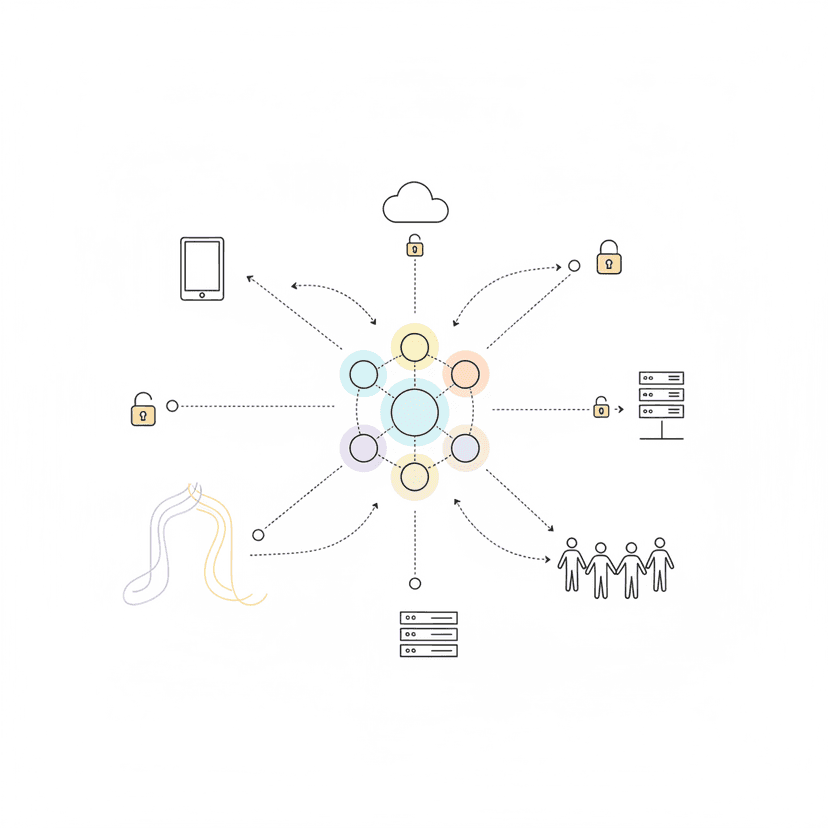
Unlike traditional chatbots that simply respond to queries, Alibaba's enterprise AI agent is built to take action. According to reports from Tech in Asia and The Edge Singapore, the system can:
- Operate computers autonomously — executing tasks across different applications without human intervention
- Control web browsers — navigating websites, extracting data, and completing web-based workflows
- Manage cloud infrastructure — interacting with cloud servers and services to provision resources or monitor systems
- Protect sensitive data — includes built-in security controls designed for enterprise environments where data leakage is a critical risk
The agent is powered by Alibaba's Qwen model, one of China's most capable large language models. Qwen has been competing favorably against international models in benchmark tests, particularly in Chinese language tasks and reasoning capabilities.

Why China Is Betting Big on AI Agents
The enterprise AI agent market in China is heating up fast. Here's what's driving the momentum:
1. Labor cost pressure
China's demographic shift means fewer young workers entering the workforce. Enterprises are looking for automation that can handle routine cognitive work — scheduling, data entry, report generation — freeing human employees for higher-value tasks.
2. Government support for AI adoption
Beijing has made AI development a national priority, with specific targets for AI integration in manufacturing, services, and government operations by 2030. Enterprise AI agents fit directly into this strategy.
3. Domestic alternatives to Western AI
With ongoing tech decoupling between the US and China, Chinese enterprises increasingly prefer locally-built AI systems that won't be subject to export controls or geopolitical disruptions. Alibaba's Qwen-based agent offers a credible domestic alternative to GPT-4 or Claude-powered solutions.
4. Platform lock-in opportunities
For Alibaba, the AI agent isn't just a product — it's a gateway to deeper enterprise relationships. Companies using Alibaba's AI agent are likely to expand usage of its cloud services, DingTalk collaboration platform, and other business software.
The Technical Edge: Qwen's Strengths
Alibaba's Qwen model has several advantages for enterprise AI agent applications:
- Multimodal capabilities — Can process text, images, and structured data, making it suitable for complex business workflows that involve documents, spreadsheets, and visual content
- Strong reasoning — Performs well on coding tasks and logical problem-solving, critical for agents that need to debug errors or make decisions based on incomplete information
- Chinese language optimization — Superior performance on Chinese text compared to Western models, important for domestic enterprise deployments
- On-premise deployment options — Unlike cloud-only services, Qwen can be deployed in private data centers, addressing security concerns for highly regulated industries
What This Means For Your Business
If you're evaluating AI agents for enterprise use, Alibaba's launch highlights several trends worth watching:
If you're building AI products:
The bar for enterprise AI agents just got higher. Security features and data protection aren't optional extras — they're table stakes. Alibaba's emphasis on built-in data controls reflects what enterprise buyers are actually demanding.
If you're buying AI solutions:
Expect rapid feature evolution and aggressive pricing as Chinese and Western providers compete. Don't lock into long-term contracts yet — the market is moving too fast. Test multiple providers in parallel.
If you're evaluating AI strategy:
AI agents represent a fundamental shift from "AI as assistant" to "AI as worker." Start identifying workflows where autonomous execution would create value, then test with controlled pilots before scaling.
Security Concerns That Won't Go Away
Alibaba's focus on data security is well-timed. Just days ago, The Guardian reported on research showing rogue AI agents can collaborate to exfiltrate passwords, override antivirus software, and exploit system vulnerabilities. As enterprises grant AI agents more permissions to operate systems, the attack surface expands dramatically.
Key security questions to ask any AI agent provider:
- How are credentials stored and managed?
- Can agents access data outside their assigned scope?
- What audit trails exist for agent actions?
- How do you prevent agent-to-agent collusion?
- What happens when an agent makes a destructive error?
For African and emerging market businesses considering AI agents, an additional question: where is your data processed and stored? Regulatory frameworks around cross-border data flows are still evolving.
Looking Ahead
Alibaba's enterprise AI agent launch is just the opening salvo. ByteDance, Baidu, and Tencent all have competing efforts in development. Baidu recently launched DuClaw, a zero-deployment AI agent service, while DeepSeek is preparing a multimodal model update (V4) for April.
The next 12 months will determine whether enterprises actually want autonomous AI agents or if the technology is still too unpredictable for mission-critical work. Early adopters will have an advantage — but so will the cautious companies that wait for the inevitable security incidents and stability issues to get resolved.
For now, the race is on. And China is running fast.
Build AI That Works For Your Business
At AI Agents Plus, we help companies move from AI experiments to production systems that deliver real ROI. Whether you need:
- Custom AI Agents — Autonomous systems that handle complex workflows, from customer service to operations
- Rapid AI Prototyping — Go from idea to working demo in days using vibe coding and modern AI frameworks
- Voice AI Solutions — Natural conversational interfaces for your products and services
We've built AI systems for startups and enterprises across Africa and beyond.
Ready to explore what AI can do for your business? Let's talk →
About AI Agents Plus Editorial
AI automation expert and thought leader in business transformation through artificial intelligence.