Anthropic Launches Claude Enterprise Plugins, Directly Challenging Microsoft 365 Copilot
Anthropic unveiled a suite of specialized AI agent plugins that embed Claude directly into workplace apps like Excel, PowerPoint, and Slack. The move positions AI agents as direct replacements for traditional enterprise SaaS tools, intensifying competition with Microsoft and Google.

Anthropic just made its biggest strategic move yet — and Microsoft should be worried. On February 25, 2026, the AI safety company announced Claude Cowork and Enterprise Plugins, a suite of specialized AI agents that embed directly into workplace applications like Excel, PowerPoint, Slack, Google Drive, Gmail, and DocuSign.
This isn't just another API integration. Anthropic is positioning Claude as a direct replacement for traditional enterprise software workflows, challenging Microsoft 365 Copilot, Google Workspace AI, and the entire SaaS ecosystem that's been building AI features piecemeal.
What Anthropic Actually Launched
The announcement includes two major components:
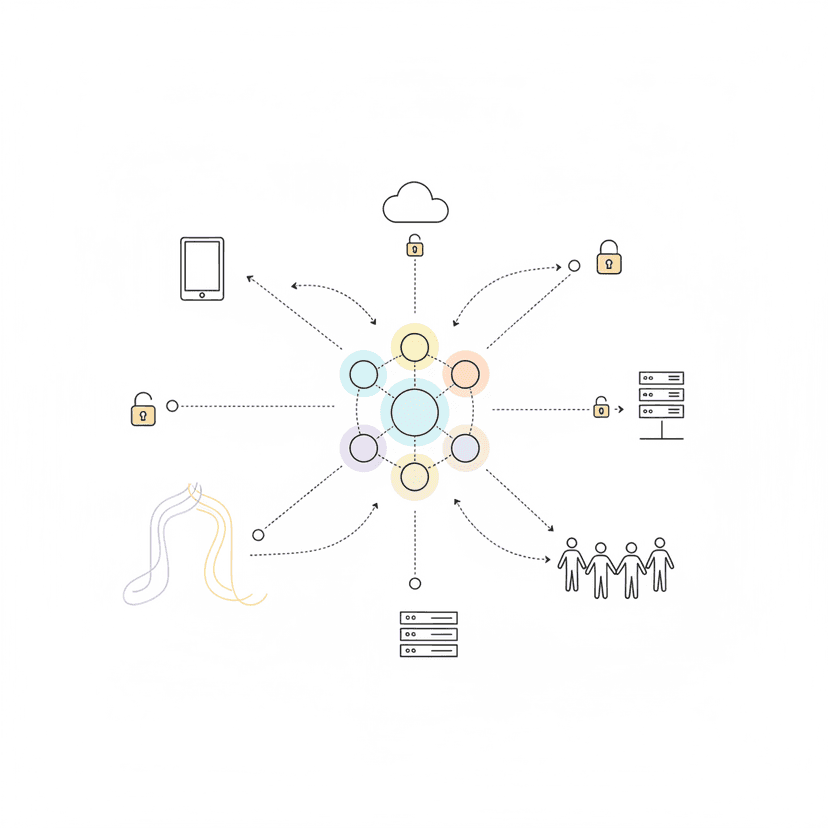
1. Claude Cowork — A unified interface where Claude can access and work with data across multiple enterprise platforms simultaneously. Think of it as Claude's workspace where it can pull from Google Drive, read emails in Gmail, access documents in DocuSign, and operate across your entire digital work environment.
2. Specialized Enterprise Plugins — Customizable, open-source AI agent plugins tailored for specific business functions:
- Finance agents — Budget analysis, financial modeling, forecasting
- HR agents — Recruitment workflows, employee onboarding, policy management
- Design agents — Creative asset generation, brand consistency checks, design system management
- Operations agents — Process automation, workflow optimization, resource allocation
These plugins come with strict administrative controls, allowing IT teams to define exactly what data Claude can access and what actions it can take. The open-source nature means companies can customize agents for their specific workflows — something Microsoft's one-size-fits-all Copilot struggles with.
Why This Is a Bigger Deal Than It Sounds
Microsoft launched Copilot with enormous fanfare and a $30/month price tag. Google followed with Workspace AI. Both positioned their offerings as assistants that sit alongside your existing tools.
Anthropic is doing something different. By releasing open-source, customizable plugins instead of a monolithic assistant, they're enabling a fundamentally different model:
Traditional approach (Microsoft, Google):
- One AI assistant tries to help with everything
- Generic responses that don't understand your specific business context
- Locked into vendor-specific ecosystems
- Pay per user, regardless of usage
Anthropic's approach:
- Specialized agents for each business function
- Deeply customizable to your workflows and data
- Works across multiple platforms (Google, Microsoft, DocuSign, etc.)
- Open source means you can modify and extend
This is the agentic AI model that's been theorized for months — AI that doesn't just answer questions but actively performs work across systems.
The Competitive Implications
Microsoft has invested $13 billion in OpenAI and built Copilot deeply into its productivity suite. Google has Gemini embedded across Workspace. Both companies assumed their distribution advantage (billions of users already using Office and Gmail) would be insurmountable.
But Anthropic's strategy bypasses that advantage entirely. You don't need to switch from Microsoft Office to Google Workspace or vice versa. Claude plugins work with both. They also work with dozens of other enterprise tools that neither Microsoft nor Google controls.
For enterprise buyers, this is huge:
- No vendor lock-in — Claude works with whatever tools you're already using
- Better customization — Open-source plugins can be tailored to specific industries or workflows
- More reliable — Anthropic's constitutional AI approach means fewer hallucinations in mission-critical workflows
- Transparent pricing — API-based usage instead of flat per-seat licensing
As one executive quoted in The Tech Buzz put it: "We're not replacing Microsoft Office. We're replacing what people thought Microsoft Copilot would do."
What This Means for Enterprise AI Adoption
The enterprise AI market has been stuck in a weird place. Companies know they need AI, but:
- Off-the-shelf assistants like Copilot feel generic
- Building custom AI solutions requires significant engineering resources
- IT departments worry about security and data governance
Anthropic's enterprise plugins thread this needle. They're:
- Specialized enough to actually solve real business problems
- Customizable enough to fit your specific workflows
- Secure enough to meet enterprise IT requirements
- Accessible enough that you don't need an AI engineering team
For SMBs and funded startups (Anthropic's target market according to recent positioning), this is the sweet spot. You get enterprise-grade AI without enterprise-scale implementation costs.
The Technical Edge: Constitutional AI in Production
What makes Claude particularly suited for enterprise deployment is Anthropic's Constitutional AI approach. Unlike models trained purely on next-token prediction, Claude is trained with explicit values and constraints.
In practice, this means:
- Fewer hallucinations when working with financial data or legal documents
- Explainable reasoning — Claude can articulate why it made specific decisions
- Built-in safety guardrails — Less risk of the AI going off-script in customer-facing scenarios
- Consistent behavior across different prompts and contexts
For a finance team using Claude to model quarterly projections or an HR team using it to draft employment contracts, this reliability advantage matters far more than raw speed or creativity.
What This Means For Your Business
If you're building AI products: Watch how Anthropic is positioning specialized agents over general assistants. The market is moving toward vertical AI solutions — agents that deeply understand specific business functions rather than trying to do everything. If you're building an AI layer for your product, consider the plugin model.
If you're buying AI solutions: Don't lock into vendor-specific AI assistants yet. The market is still forming. Anthropic's announcement shows that interoperability and customization are becoming competitive advantages. Demand integrations that work across your existing tool stack, not replacements for it.
If you're evaluating enterprise AI strategy: The "agentic AI" era is here. These aren't chatbots that answer questions — they're autonomous systems that perform work. Your AI strategy should focus on:
- Which processes can be delegated to agents (not just automated)
- What data access and controls you need to make that safe
- How to measure agent performance beyond traditional software metrics
Looking Ahead
Anthropic's timing is interesting. OpenAI's enterprise traction has been slower than expected. Microsoft Copilot adoption rates have disappointed analysts. Google Workspace AI is still finding its footing.
The enterprise AI market is wide open, and Anthropic is betting that specialized, customizable agents will win over generic, locked-in assistants.
Microsoft and Google have distribution. Anthropic has positioning. The next six months will show which advantage matters more.
Build AI Agents That Work For Your Business
At AI Agents Plus, we help companies design and deploy custom AI agents for real business workflows — from customer service automation to operational intelligence.
Whether you need:
- Custom AI Agents — Autonomous systems tailored to your specific processes
- Enterprise AI Integration — Connect AI capabilities across your existing tool stack
- Rapid AI Prototyping — Go from concept to working demo in days, not months
We've built AI systems for startups and enterprises across Africa and beyond.
Ready to explore what AI agents can do for your business? Let's talk →
About AI Agents Plus Editorial
AI automation expert and thought leader in business transformation through artificial intelligence.