Anthropic Acquires Vercept: Doubling Down on AI Agents That Actually Work
Anthropic's acquisition of Vercept to enhance Claude's computer use capabilities signals a critical shift: AI agents controlling software aren't a demo feature anymore — they're the future of enterprise AI.
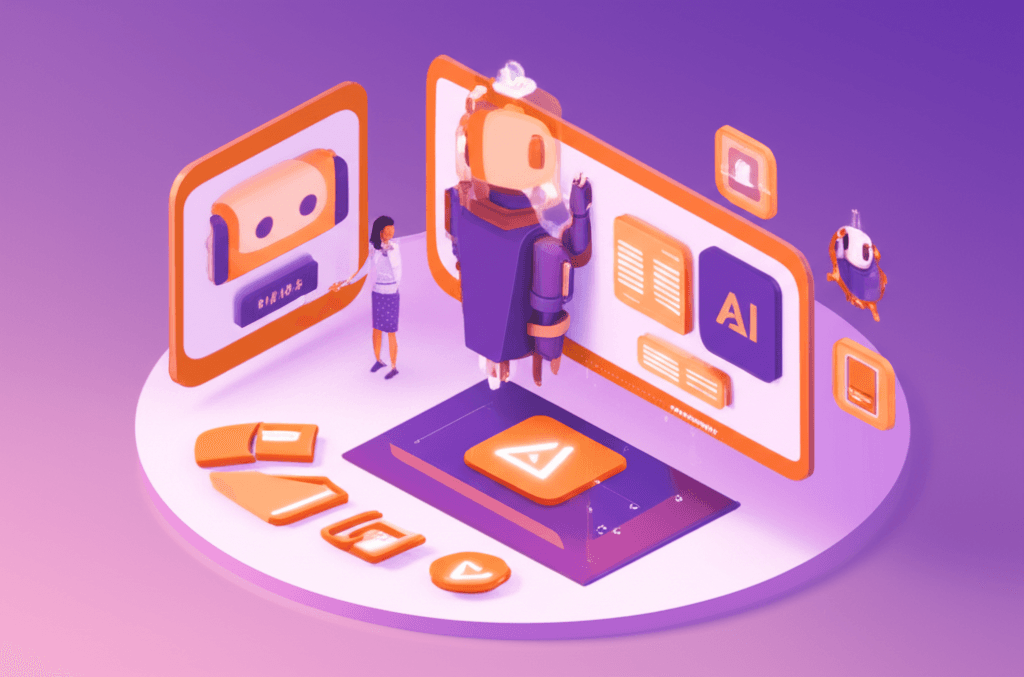
Anthropic just acquired Vercept, a startup focused on AI systems that can actually control software applications. The deal is aimed at enhancing Claude's "computer use" feature — the capability that lets AI agents interact with applications just like a human would, clicking buttons, filling forms, and navigating interfaces.
While most AI companies are still showing proof-of-concept demos of agentic AI, Anthropic is buying the technology to make it production-ready. That's the real signal here.
What Computer Use Actually Means
Claude's computer use feature lets the AI operate a computer by controlling the mouse and keyboard. Point it at a web app, and it can navigate, extract data, fill out forms, or complete multi-step workflows — all autonomously.
This isn't a parlor trick. It's the bridge between "chatbot that answers questions" and "AI agent that completes tasks."
Most enterprise software wasn't built with AI integration in mind. There are no APIs for legacy systems. No webhooks for that ancient ERP. No programmatic access to vendor portals. But they all have user interfaces designed for humans.
Computer use lets AI agents operate those interfaces directly — no custom integration required. That's why Anthropic is investing heavily in making this capability bulletproof.
Why Anthropic Acquired Vercept
Vercept brought specialized expertise in building AI systems that reliably control software. The company focused on making agentic AI robust enough for real-world use — handling edge cases, managing errors, and recovering gracefully when interfaces change.
Those capabilities are exactly what Anthropic needs. Computer use is powerful, but it's also brittle. A small UI change can break an AI workflow. An unexpected modal can stall execution. Handling these scenarios requires deep engineering, not just bigger models.
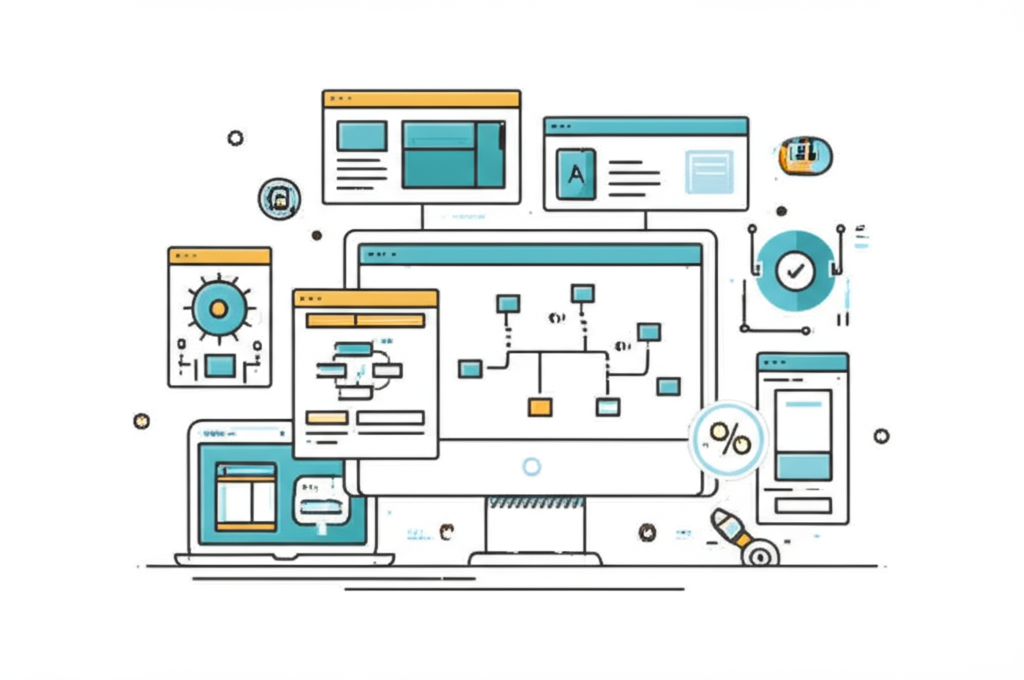
By acquiring Vercept, Anthropic gets:
- Engineering talent specialized in agentic AI reliability
- Proprietary techniques for robust computer use implementations
- Enterprise experience deploying AI agents in production environments
- Faster time to market for computer use enhancements
The Broader AI Agent Race
Anthropic isn't alone in this push. The entire AI industry is racing to build agents that can complete complex tasks autonomously:
- OpenAI has been testing agentic capabilities in GPT-4 and is rumored to be building dedicated agent frameworks
- Google integrated Gemini with workspace tools, letting it act across Gmail, Docs, and Calendar
- Microsoft embedded Copilot throughout Office 365, enabling cross-application workflows
- Nvidia (as we covered earlier) is building the infrastructure layer to support enterprise AI agents
But Anthropic's approach is distinctive. Instead of building tightly integrated experiences within proprietary ecosystems, Claude's computer use works with any software. It's application-agnostic — which means it can automate workflows across SaaS tools, legacy systems, and custom applications alike.
The Technical Challenge: Making Computer Use Reliable
Computer use sounds simple in theory: give the AI vision (screenshots), agency (mouse/keyboard control), and a task. But making it work reliably is extraordinarily difficult.
Consider the challenges:
Interface variability: Web apps change layouts constantly. A button might move, a menu might reorganize, a workflow might add steps. The AI needs to adapt dynamically.
State management: Multi-step workflows require tracking progress, handling errors, and deciding when to retry vs. escalate. The AI needs robust state machines, not brittle scripts.
Security and safety: Giving AI control of a computer is powerful — and risky. The system needs guardrails to prevent unintended actions, especially in production environments.
Performance: Screen capture, vision processing, decision-making, and action execution create latency. Real-world use cases demand sub-second response times for smooth operation.
Vercept's expertise addresses these challenges directly, particularly around reliability and error handling in complex enterprise environments.
What This Means for Enterprise AI Adoption
The Vercept acquisition accelerates a critical trend: AI is moving from conversational interfaces to autonomous task completion.
For enterprises evaluating AI strategies, this shift matters:
The value shifts from "answers" to "outcomes": Don't ask "can the AI answer questions about our customer data?" Ask "can the AI complete the entire customer onboarding workflow?"
Integration gets easier: Computer use eliminates the need for custom API integrations with every tool in your stack. The AI operates the same interfaces your team uses.
Automation expands beyond APIs: Legacy systems, vendor portals, and custom applications without APIs can now be automated using AI agents with computer use capabilities.
What This Means For Your Business
If you're evaluating AI agents for your company:
- If you rely on SaaS tools: Computer use-capable AI can automate workflows that span multiple applications — Salesforce to Slack to your billing system — without custom integrations.
- If you have legacy systems: AI agents with computer use can interact with old software that has no API, no documentation, and no developer support — as long as it has a UI.
- If you're building AI products: Reliability in agentic AI is the new competitive moat. Demos are easy; production-grade computer use is hard. Companies solving that will win.
Looking Ahead: The Agent Economy
Anthropic's Vercept acquisition is a signal of where enterprise AI is heading: toward autonomous agents that complete tasks, not just answer questions.
We're watching the foundations of an "agent economy" being built:
- Infrastructure providers (Nvidia, cloud platforms) are building the compute and knowledge layers
- Model providers (Anthropic, OpenAI, Google) are building the agentic capabilities
- Application providers (Microsoft, Salesforce) are embedding agents into workflows
- Enterprises are starting to deploy AI agents in production for specific use cases
The companies that figure out reliable, safe, production-grade agentic AI will dominate the next wave of enterprise software.
Anthropic is betting that computer use — the ability for AI to control software directly — is the key capability. The Vercept acquisition doubles down on that bet.
For businesses, the question isn't "should we explore AI agents?" It's "how do we prepare our systems and processes for autonomous AI task completion?"
The agent economy is coming. Get ready.
Build AI Agents That Deliver Real Results
At AI Agents Plus, we specialize in building autonomous AI systems that go beyond chatbots to actually complete tasks. Whether you need:
- Custom AI Agents — Autonomous systems that handle multi-step workflows across your entire tool stack
- Agentic Automation — AI that operates your existing software to eliminate repetitive work
- Production AI Systems — Reliable, tested AI solutions designed for enterprise deployment
We've built AI agents for companies across industries, from customer service automation to operations workflows.
Ready to explore what AI agents can do for your business? Let's talk →
About AI Agents Plus Editorial
AI automation expert and thought leader in business transformation through artificial intelligence.