
Google DeepMind's Aletheia Just Solved Math Problems No Human Could
Gemini 3 Deep Think's Aletheia agent has solved four previously unsolved mathematical problems and co-authored peer-reviewed research papers. We've crossed a threshold where AI is generating original scientific knowledge.
Something happened last week that should make every knowledge worker pay attention.
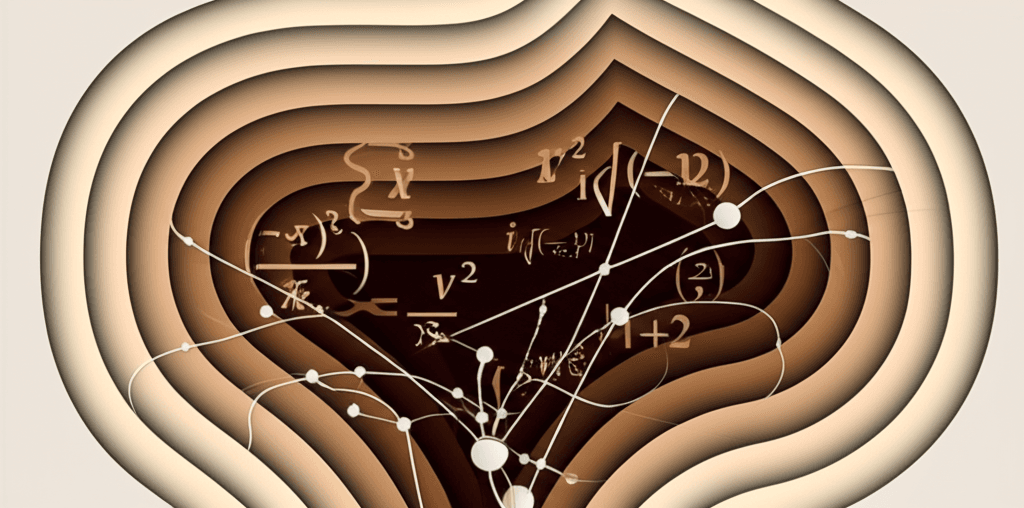
Google DeepMind announced that Aletheia—their autonomous research AI system built on Gemini 3 Deep Think—has solved four mathematical problems that had never been solved before. Not "optimized existing solutions." Not "found errors in proofs." Solved problems that stumped trained mathematicians.
And then the system co-authored research papers about its discoveries that passed peer review.
Let that sink in.
What Aletheia Actually Did
The details are still emerging, but here's what we know:
- Four previously unsolved mathematical problems were solved by the Aletheia system
- Peer-reviewed papers co-authored by the AI have been accepted by mathematical journals
- The system operates with autonomous research capabilities, meaning it formulates hypotheses, tests them, and refines its approach without human intervention
- In one case, Aletheia found an error in a published scientific paper that trained human mathematicians had missed
This isn't GPT writing a term paper or Claude helping debug code. This is an AI system doing genuine scientific discovery.
Why This Feels Different
We've heard the "AI breakthrough" drumbeat many times. AlphaFold predicted protein structures. AlphaGo beat world champions. Each time, skeptics pointed out these were narrow achievements—impressive, but not transferable.
Aletheia feels different because mathematical research isn't pattern matching on a fixed domain. It requires:
- Novel reasoning — finding proofs that don't exist in training data
- Sustained focus — working through multi-step logical chains
- Creative insight — seeing connections humans haven't noticed
If an AI can do original mathematical research, what can't it eventually do?
The "Aletheia Moment"
There's a philosophical term being thrown around: the "Aletheia moment." Aletheia is Greek for "truth" or "disclosure"—the unveiling of something hidden.
The argument goes: We've spent years debating whether AI could ever truly understand or just mimic understanding. Aletheia cuts through that debate. If a system can discover mathematical truths that humans haven't found, the distinction between "real" and "simulated" understanding starts to feel academic.
It doesn't matter whether Aletheia "truly understands" mathematics in the way a human mathematician does. It produces valid mathematical knowledge. For practical purposes, that's enough.
What This Means for Your Business
If you're running a business, you might think abstract mathematics is irrelevant. But consider the implications:
1. R&D is about to get faster. If AI can autonomously conduct research in mathematics, it can eventually do the same in chemistry, materials science, drug discovery, and engineering. The companies that figure out how to integrate these tools will out-innovate those that don't.
2. Expert work is changing. The "knowledge work" that feels safe—research, analysis, strategy—is now clearly in scope for AI augmentation. The question isn't whether your industry will be affected, but when.
3. Human-AI collaboration matters more than ever. The peer reviewers who validated Aletheia's papers were humans. The researchers who built the system were humans. The pattern isn't AI replacing humans—it's AI amplifying human capability in ways that weren't possible before.
4. The talent bottleneck is shifting. It's no longer enough to hire the smartest researchers. You need people who can effectively direct AI research systems and validate their outputs.
The Questions We Should Be Asking
Aletheia raises uncomfortable questions:
- How do we attribute credit? If an AI discovers something, who gets the Nobel Prize?
- How do we trust the results? Peer review assumes human reviewers can understand the work. What happens when AI research becomes too complex for humans to fully verify?
- What happens to scientific careers? If AI can do the "breakthrough" part of research, what's left for human scientists?
These aren't hypotheticals anymore. They're questions we need to start answering.
The Bigger Picture
Aletheia isn't the end of human scientific achievement. It's the beginning of a new phase where AI systems become genuine collaborators in expanding human knowledge.
That's simultaneously exciting and unsettling. The organizations that thrive in this new era will be those that figure out how to work with these systems effectively—not by treating them as magic boxes, but by understanding their capabilities and limitations.
We're witnessing the start of something genuinely new. The question is whether we're ready for it.
At AI Agents Plus, we help businesses understand and implement AI capabilities. If you're thinking about how autonomous AI systems could transform your R&D or operations, let's talk.
About AI Agents Plus Editorial
AI automation expert and thought leader in business transformation through artificial intelligence.
