DeepSeek Withholds Latest AI Model from US Chipmakers, Signaling China's AI Independence
Chinese AI lab DeepSeek declined to share its upcoming flagship model with U.S. chipmakers like Nvidia for optimization, breaking industry norms. The move signals China's growing AI independence and the deepening US-China tech decoupling.

Chinese AI lab DeepSeek just made a quiet but significant statement: we don't need you anymore. On February 25, 2026, reports surfaced that DeepSeek declined to share its upcoming flagship model with U.S. chipmakers like Nvidia for performance optimization — a standard practice that's been industry norm for years.
This isn't just about one company's decision. It's a signal that China's AI ecosystem has reached a critical inflection point: self-sufficiency over collaboration.
What Actually Happened
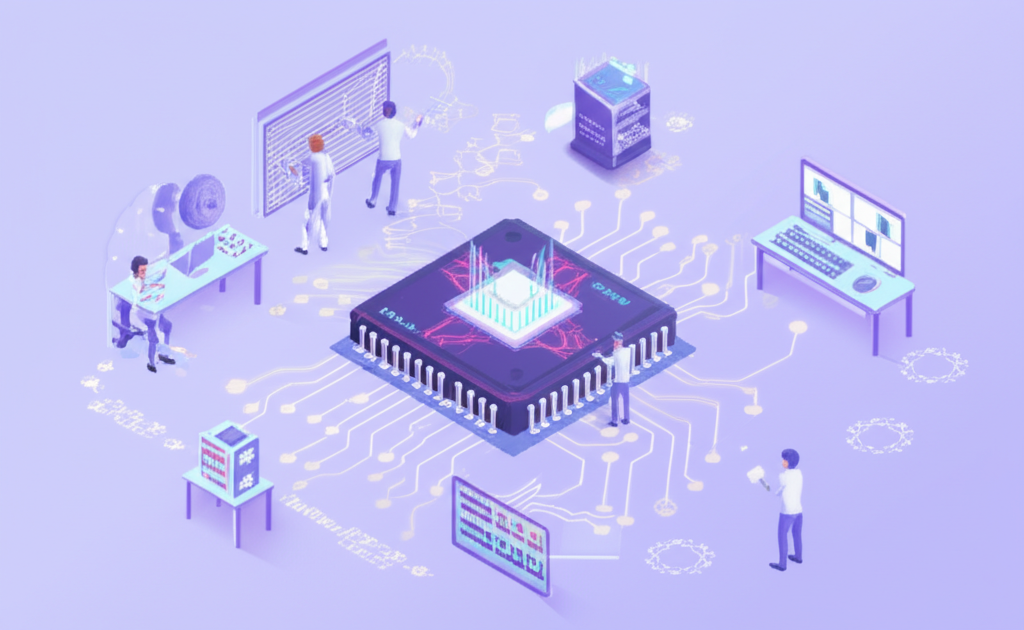
For context, here's how AI model optimization typically works:
- AI labs develop new models (like GPT-4, Claude, or Llama)
- They share models with chip vendors (Nvidia, AMD, Intel) under NDA
- Chipmakers optimize their hardware for those specific models (kernel tuning, memory allocation, instruction sets)
- Everyone benefits — models run faster, chips sell better, ecosystem thrives
DeepSeek broke this pattern. According to sources cited by Investing.com, the company chose not to provide its next-generation model to U.S. chipmakers for pre-release optimization.
This means:
- Nvidia won't get early access to tune CUDA for DeepSeek's architecture
- Intel won't optimize Gaudi or Xeon chips for DeepSeek workloads
- AMD won't tailor ROCm software for DeepSeek's requirements
Instead, DeepSeek is optimizing in-house, for Chinese-made chips.
Why This Matters: The Geopolitics of AI Infrastructure
The U.S. has spent the last three years trying to slow China's AI progress through export controls:
- 2022: Blocked sales of Nvidia A100 and H100 GPUs to China
- 2023: Expanded controls to include A800 and H800 (China-specific variants)
- 2024: Further tightened restrictions on advanced packaging and chip design tools
- 2025: Added AI software and training techniques to export control lists
The stated goal was to prevent China from developing cutting-edge AI capabilities, particularly for military and surveillance applications.
DeepSeek's decision suggests those controls failed.
If DeepSeek is confident enough to skip U.S. chipmaker optimization, it means one of two things:
- They've developed internal optimization capabilities that rival Nvidia's CUDA team
- They're using Chinese-made chips (like Huawei's Ascend 910 or Alibaba's Yitian) that are "good enough"
Either scenario is a strategic loss for U.S. tech dominance.
The Nvidia Problem
Nvidia's dominance in AI hardware is built on two pillars:
- Raw chip performance — Their GPUs are genuinely faster
- Software ecosystem — CUDA, TensorRT, and partnerships with AI labs
DeepSeek's move threatens pillar #2. If major Chinese AI labs stop collaborating with Nvidia, the company loses:
- Early insight into model architectures (critical for roadmap planning)
- Optimization feedback loops (what actually matters in production workloads)
- Reference implementations (proving their chips work best for cutting-edge models)
This is particularly painful because Nvidia's China revenue reportedly dropped 30% year-over-year due to export controls. Now they're losing mindshare in addition to market share.
What Changed? China's AI Infrastructure Maturation
Three years ago, DeepSeek couldn't have made this decision. Chinese AI labs were entirely dependent on U.S. chips and software. But the landscape has shifted:
Hardware alternatives:
- Huawei Ascend 910B/C chips (reportedly approaching A100 performance)
- Alibaba Yitian ARM chips (optimized for inference)
- Biren BR100 GPUs (though production has faced setbacks)
- Domestic RISC-V designs (early stage but advancing)
Software stack maturation:
- MindSpore (Huawei's CUDA alternative)
- OneFlow (domestic deep learning framework)
- PaddlePaddle (Baidu's framework, increasingly competitive)
- Custom kernels and compilers (no longer reliant on NVIDIA libraries)
Talent concentration:
- Thousands of AI engineers who previously worked at U.S. companies returned to China
- Universities producing 3x more AI PhDs than the U.S.
- Government-funded AI research institutes at scale
DeepSeek's confidence reflects this entire ecosystem reaching maturity, not just one company's capabilities.
The Bigger Picture: Bifurcated AI Ecosystems
We're watching the global AI industry split into two non-interoperable ecosystems:
Western AI stack:
- Nvidia GPUs + CUDA
- AMD GPUs + ROCm
- Intel Xeon/Gaudi + oneAPI
- Cloud platforms (AWS, Azure, GCP)
- Models: OpenAI, Anthropic, Google, Meta
Chinese AI stack:
- Huawei Ascend + MindSpore
- Alibaba Yitian + proprietary stack
- Domestic cloud (Aliyun, Tencent Cloud, Huawei Cloud)
- Models: DeepSeek, Baidu, Alibaba Qwen, ByteDance
This bifurcation has massive implications:
- Incompatible standards (like VHS vs. Betamax, or iOS vs. Android)
- Duplicated R&D spending (both sides reinventing the wheel)
- Market fragmentation (global AI companies must maintain parallel infrastructure)
- Talent silos (skills don't transfer between ecosystems)
For AI startups and enterprises, this means choosing sides — or supporting both stacks, which doubles infrastructure costs.
What This Means For Your Business
If you're building AI products: Consider geographic market strategy early. If you plan to operate in China, you'll need to support Chinese AI infrastructure. That means:
- Training on Huawei Ascend or Alibaba chips
- Deploying to Chinese cloud platforms
- Using MindSpore or PaddlePaddle instead of PyTorch/TensorFlow
The cost of "porting" a Western-stack AI product to China is significant and growing.
If you're buying AI solutions: Ask vendors about infrastructure dependencies. If your vendor is locked into Nvidia/AWS, consider:
- What happens if those relationships change due to geopolitics?
- Do you have geographic redundancy?
- Can your AI systems run on alternative hardware if needed?
If you're evaluating AI chip investments: The "Nvidia is the only option" narrative is weakening. Chinese alternatives are closing the gap, especially for:
- Inference workloads (where raw compute matters less than efficiency)
- Specific model architectures (custom accelerators can beat general-purpose GPUs)
- Cost-sensitive deployments (Huawei chips are reportedly 40-60% cheaper)
Don't assume U.S. chip dominance is permanent.
Looking Ahead: The AI Cold War Accelerates
DeepSeek's decision is a confidence signal. They're telling the market: we can build world-class AI without U.S. chips or partnerships.
Whether that's true remains to be seen. But the perception shift is already happening. Other Chinese AI labs will likely follow DeepSeek's lead. Why cooperate with companies in a country that's actively trying to kneecap your industry?
The U.S. export control strategy assumed China couldn't build competitive AI without American chips. That assumption is being tested in real time.
If DeepSeek's next model performs as well as (or better than) GPT-4 or Claude — without Nvidia optimization — it will be a watershed moment for the AI industry.
The message will be clear: the age of U.S. monopoly on cutting-edge AI is over.
Build AI Systems That Work Anywhere
At AI Agents Plus, we help companies navigate the evolving AI landscape — from infrastructure decisions to deployment strategies.
Whether you need:
- Multi-cloud AI deployments — Build systems that work across AWS, Azure, and Chinese cloud platforms
- Hardware-agnostic architecture — Design AI solutions that aren't locked to specific chips
- Geographic AI strategy — Plan for compliance and performance across regions
We've built AI systems for clients operating globally, including in emerging markets where infrastructure constraints require creative solutions.
Ready to future-proof your AI infrastructure? Let's talk →
About AI Agents Plus Editorial
AI automation expert and thought leader in business transformation through artificial intelligence.