Epic's AI Digital Human Bet: The Metaverse Isn't Dead—It's Getting Smarter
Epic Games just acquired Meshcapade, a German AI startup building tech to animate hyperrealistic digital humans. While everyone declared the Metaverse dead, Epic kept building — and now they're betting AI will bring it to life.

While the tech world moved on from the Metaverse hype cycle, Epic Games kept quietly building. Their latest move: acquiring Meshcapade, a German AI startup spun out of the Max Planck Institute that specializes in creating and animating photorealistic digital humans.
This isn't about VR goggles or virtual real estate. It's about making digital humans good enough that you can't tell them from real ones — and making them cheap and fast enough to use everywhere.
The Metaverse didn't die. It just stopped being a buzzword and started being infrastructure.
What Meshcapade Actually Does
Meshcapade builds AI models that turn 2D images or video into accurate 3D body models. Their tech can:
- Generate a full 3D human mesh from a single photo
- Animate digital humans with realistic movement and expression
- Adapt body shapes, clothing, and motion in real-time
- Scale from mobile devices to high-end Unreal Engine productions
The hard part of digital humans isn't making them look good in a single frame. It's making them move realistically. Walk, gesture, emote, interact — all the micro-movements that scream "uncanny valley" when done poorly.
Meshcapade's AI handles the physics, biomechanics, and motion synthesis. You feed it reference footage or motion capture data, and it generates animation that looks and feels human.
That's what Epic needs for MetaHumans, its hyperrealistic character creation tool in Unreal Engine.
Why Epic Wants This (And Why Now)
Epic's MetaHumans already let you create photorealistic digital characters in minutes. But animating them? That still requires skilled animators, motion capture studios, and expensive post-production.
Meshcapade changes the economics. With AI-driven animation:
- Game developers can create realistic NPCs without hiring a mocap team
- Film studios can generate background characters or digital doubles at scale
- Virtual production can animate crowds, extras, and secondary characters in real-time
- Corporate training can use lifelike avatars without Hollywood-level budgets
Epic isn't just selling a game engine anymore. They're selling the infrastructure for any digital human use case: games, films, virtual assistants, teleconferencing, training simulations, even AI companions.
And they're betting that AI makes it accessible enough to go mainstream.
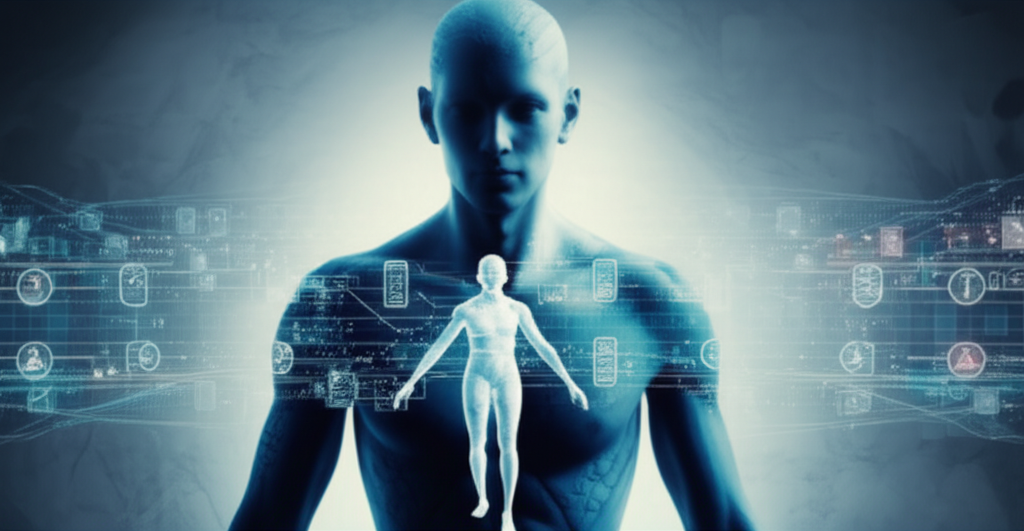
The Timing: AI Makes Digital Humans Useful
MetaHumans launched in 2021. The tech was impressive, but the workflow was still expensive. You needed:
- 3D artists to sculpt and texture
- Riggers to build skeletons and controls
- Animators to create movement
- Engineers to optimize for real-time performance
Meshcapade's AI collapses that pipeline. Their team joins Epic's AI Research division, which tells you where Epic sees this going: automated digital human creation and animation.
Imagine:
- A game developer types "create a 40-year-old detective with a limp" and Unreal generates the character, rigged and animated
- A filmmaker shoots an actor once, then uses AI to generate variations (different ages, body types, wardrobes) for background scenes
- A corporate training platform automatically creates realistic instructor avatars that match the learner's language and cultural context
That's not science fiction. That's what Meshcapade + Epic's AI Research team will build.
Why Germany? Why Now?
Meshcapade is based in Tübingen, Germany — home to the Max Planck Institute for Intelligent Systems. That's not a coincidence.
Europe (and Germany specifically) has been investing heavily in AI research that's not pure deep learning. Meshcapade's approach combines:
- Physics-based modeling: Biomechanics, skeletal structures, realistic movement constraints
- Generative AI: Neural networks trained on massive motion capture datasets
- Real-time optimization: Making it fast enough to run in Unreal Engine on consumer hardware
This is the kind of research that takes years of academic work before it becomes commercially viable. Epic is buying that R&D pipeline.
And they're doing it now because the AI part is finally good enough. Five years ago, you couldn't generate realistic human motion from AI alone. Today, you can. Tomorrow, it'll be trivial.
What This Means for Gaming
The obvious application: better NPCs (non-player characters) in games.
Right now, even AAA games have NPCs that move like animatronics. They repeat the same 3-4 animations, clip through objects, and break immersion the moment you look closely.
Meshcapade + Epic's AI could enable:
- Procedural NPC animation: Thousands of unique characters, each with distinct movement patterns, generated on the fly
- Reactive NPCs: Characters that respond to player actions with realistic body language, not just scripted responses
- Player-created characters: Let players upload a photo and the AI generates a playable digital version of themselves
The bigger shift: this tech makes single-player games feel more alive. You're not interacting with a dozen repeated character models anymore. Every NPC can look and move uniquely.
That's a game design unlock, not just a graphics upgrade.
What This Means for Film and Virtual Production
Hollywood already uses Unreal Engine for virtual production (The Mandalorian, The Batman, etc.). But digital humans are still the domain of VFX houses with nine-figure budgets.
Meshcapade brings that capability to:
- Independent filmmakers: Create realistic digital extras without hiring a crowd
- Episodic TV: Generate consistent digital doubles for stunts, distant shots, and reshoots
- Advertising and corporate video: Realistic spokesperson avatars that don't require hiring talent
The cost structure changes completely. Instead of $50K+ per digital character, you might be talking $500. Instead of weeks of VFX work, you might be talking hours.
That's not replacing human actors. It's making digital humans practical for use cases that were never economically viable before.
What This Means for Business Applications
Here's where it gets interesting for non-entertainment companies:
Virtual assistants and customer service: Instead of a chatbot interface, imagine a realistic digital human that speaks, gestures, and responds naturally. Powered by voice AI (like ElevenLabs or Play.ht) and orchestrated by an AI agent backend.
Training and simulation: Medical training, customer service training, sales roleplay — all using AI-generated scenarios with realistic human avatars.
Telepresence: Zoom calls with digital avatars that match your expressions and body language in real-time. Sounds dystopian? Maybe. But it's coming.
Influencers and content creation: AI-generated influencers already exist. Meshcapade makes them look and move like real people. That's a whole new content economy.
The common thread: anywhere you need a "person" in a digital environment, but hiring or filming a real person is too expensive, slow, or logistically impossible.
The Ethical Minefield
Of course, the same tech that creates realistic training avatars can create deepfakes, digital impersonations, and AI-generated misinformation.
Meshcapade's tech doesn't inherently solve or create these problems — the ethics depend on how it's used. But Epic needs to get ahead of this:
- Content provenance: Can you verify if a digital human was AI-generated?
- Consent and rights: If an AI generates a character based on someone's likeness, who owns it?
- Disclosure requirements: Should AI-generated humans be labeled in films, ads, or virtual environments?
Right now, there are no clear answers. But as this tech becomes accessible, the questions get louder.
Why This Acquisition Matters Beyond Epic
Epic isn't the only company betting on AI-powered digital humans:
- Nvidia has Omniverse and Audio2Face (AI-driven facial animation)
- Meta has Codec Avatars (photorealistic VR avatars)
- Microsoft has neural TTS and Azure AI for avatars
- Synthesia and D-ID already sell AI video avatars for corporate use
But Epic has the distribution advantage: Unreal Engine is already the industry standard for real-time 3D. By integrating Meshcapade's AI directly into Unreal, Epic makes digital humans a default feature, not a specialized add-on.
That's how technology gets adopted: make it so easy that not using it feels like extra work.
What Businesses Should Watch For
If you're in gaming, film, virtual events, training, or any field where digital humans might be useful:
1. Expect democratization: This tech will get cheap and accessible fast. Plan for a world where realistic digital humans are a commodity, not a luxury.
2. Think beyond entertainment: The most interesting applications won't be in games or films. They'll be in customer service, education, healthcare, and sales.
3. Invest in AI-native workflows: If your production pipeline still assumes manual animation, you're about to be disrupted.
4. Prepare for regulatory scrutiny: Governments are waking up to deepfakes and AI-generated media. Expect disclosure laws, watermarking requirements, and content verification standards.
Looking Ahead: The Metaverse, Quietly Won
The irony: while Meta spent billions trying to convince people the Metaverse was the future, Epic just kept building the tools that will actually power it.
No hype. No Second Life 2.0 promises. Just relentless infrastructure development.
Meshcapade is one more piece: realistic, AI-animated digital humans that work in real-time, at scale, for any use case.
The Metaverse isn't a place you visit. It's the layer of digital humans, virtual environments, and AI-driven interactions that's slowly merging with the physical world.
And Epic is building the engine that runs it.
Build AI-Powered Experiences That Feel Real
At AI Agents Plus, we help businesses integrate cutting-edge AI into real-world products — whether that's:
- Voice AI agents with natural conversation and realistic responses
- AI-driven virtual assistants that handle customer interactions autonomously
- Custom AI models fine-tuned for your specific use case and brand
The future isn't about replacing humans with AI. It's about using AI to make digital experiences feel more human.
Ready to explore what's possible? Let's talk →
About AI Agents Plus Editorial
AI automation expert and thought leader in business transformation through artificial intelligence.