
AI regulation 2026 - Federal vs State AI Regulation: The 2026 Showdown That Will Shape How
Trump's executive order targets state AI laws while California, Colorado, and others press forward with their own rules. Here's the practical compliance guide for businesses deploying AI in 2026.

If you are evaluating AI regulation 2026, this guide breaks down what works and how to implement it effectively.
The United States is heading for a showdown over AI regulation. On one side, a growing number of states are passing their own AI laws, creating a patchwork of requirements that varies by jurisdiction. On the other side, federal lawmakers and the current administration are pushing for a unified national framework that would preempt state laws.
For businesses deploying AI, this regulatory battle creates real uncertainty. Do you comply with California's AI transparency requirements? Texas's AI governance rules? Colorado's AI risk assessment mandates? Or do you wait for a federal standard that might override all of them?
As of February 2026, the answer is: you need to prepare for both. Here's a practical breakdown of where AI regulation stands, where it's heading, and what your business should do about it.

The Current Federal AI Landscape
At the federal level, AI regulation has been a story of executive action and Congressional gridlock.
What Exists Today
The current federal approach to AI is a mix of executive orders and agency-level guidance rather than comprehensive legislation.
- Executive Orders: The Biden-era executive orders on AI safety (October 2023) established reporting requirements for companies developing powerful AI models, directed federal agencies to develop AI governance frameworks, and created AI safety testing standards. The current administration has modified some of these requirements but maintained the general framework
- Agency Guidance: Individual federal agencies have issued AI-specific guidance for their domains. The FDA has guidance on AI in medical devices. The SEC has guidance on AI in financial services. The FTC has been actively enforcing against deceptive AI practices using existing consumer protection authority
- NIST AI Risk Management Framework: The National Institute of Standards and Technology published a voluntary framework for managing AI risks. While not legally binding, it's become a de facto standard that many businesses reference
What's Proposed
Several federal AI bills are working through Congress, covering areas like AI transparency and disclosure requirements, algorithmic accountability for high-risk decisions, AI in hiring and employment, deepfake regulation, and AI safety testing requirements for frontier models.
The challenge is that Congressional action on comprehensive AI legislation has been slow. Different committees have jurisdiction over different aspects of AI, partisan disagreements exist on the scope of regulation, and the lobbying landscape is complex with tech companies, civil rights groups, and industry associations all pushing in different directions.
The Federal Preemption Question
The biggest regulatory question in 2026 is whether federal AI legislation will preempt state laws. Federal preemption would mean a single national standard, replacing the patchwork of state requirements. The current administration has signaled support for federal preemption, arguing that inconsistent state laws create unnecessary compliance burdens and hinder innovation.
However, states argue that federal inaction has forced them to protect their citizens, and that preemption would weaken consumer protections in states that have already passed strong AI laws.

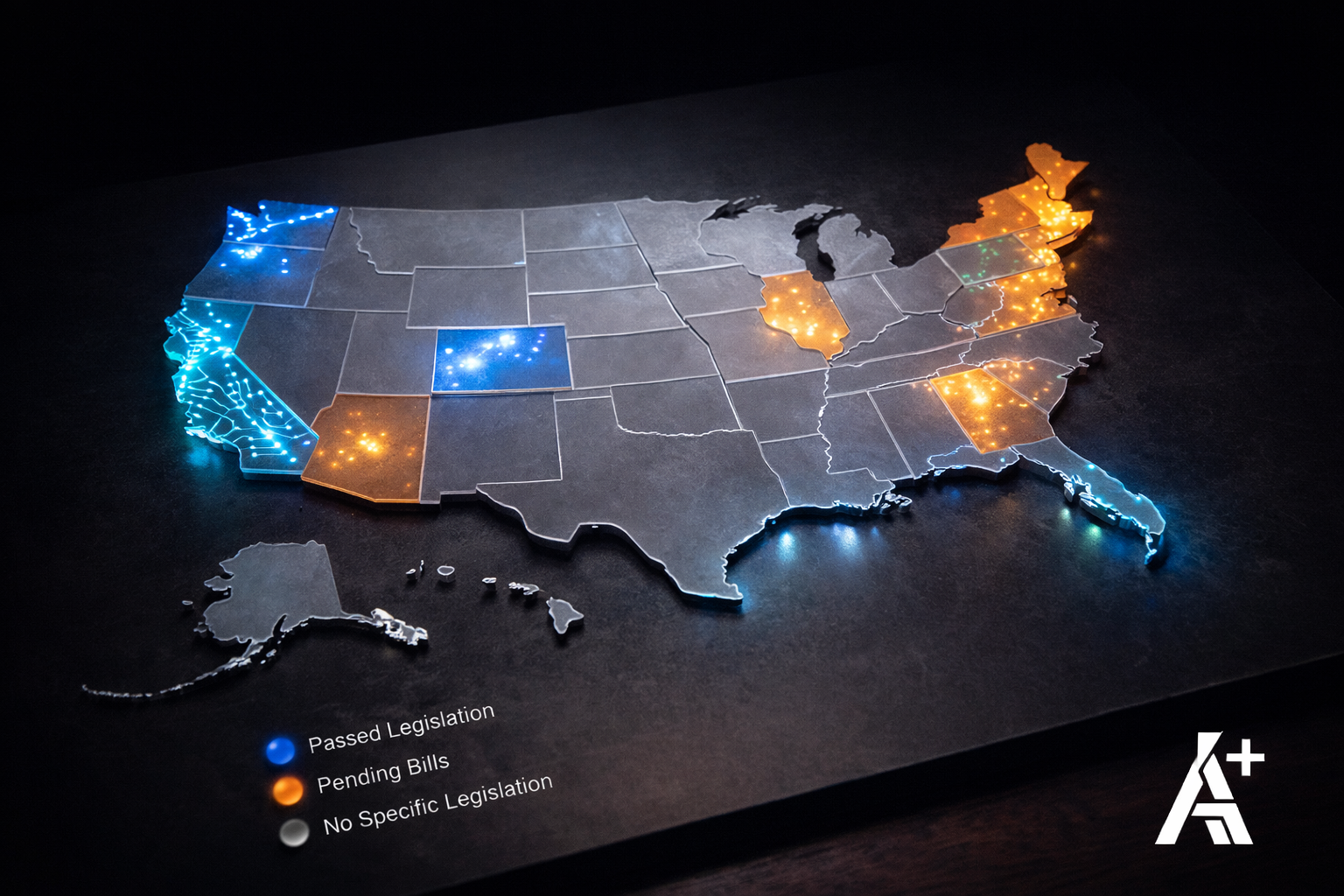
The State-by-State AI Regulation Map
While Congress debates, states have been moving aggressively. Here's where the most significant state AI legislation stands.
California
California is the most active state in AI regulation, which matters because its laws often influence other states and set de facto national standards.
- AI Transparency Act: Requires businesses to disclose when consumers are interacting with AI systems, mandate transparency about how AI systems make decisions affecting consumers, and provide mechanisms for consumers to opt out of AI-driven decisions in certain contexts
- Automated Decision-Making: Specific requirements for AI used in employment, housing, education, and financial services
- AI Safety: Requirements for companies developing large AI models, including safety testing and reporting
Colorado
Colorado's AI Act, one of the most comprehensive state AI laws, focuses specifically on high-risk AI systems.
- Risk Assessment Requirements: Businesses using AI for consequential decisions must conduct and document risk assessments
- Impact Statements: Required disclosures about how AI systems affect consumers
- Developer Obligations: AI developers must provide documentation about their systems' capabilities, limitations, and intended uses
Illinois
Illinois has been a pioneer in AI regulation through its Biometric Information Privacy Act (BIPA) and newer AI-specific legislation.
- AI in Hiring: Specific requirements for AI used in employment decisions, including video interview analysis
- Biometric Data: Extended protections for biometric data collected or processed by AI systems
- Consent Requirements: Explicit consent requirements before using AI to analyze employee or applicant data
Texas
Texas has focused on AI governance in specific contexts.
- Government AI Use: Requirements for state agencies using AI in decision-making
- Law Enforcement AI: Regulations on AI use in policing, surveillance, and criminal justice
- Data Protection: AI-related amendments to data protection laws
New York
New York City's Local Law 144 (AI in hiring) was one of the first AI-specific laws in the country. State-level proposals are expanding the scope.
- AI in Employment: Bias auditing requirements for AI hiring tools (already in effect in NYC)
- Consumer Protection: Proposed state-level AI transparency and accountability requirements
- Financial Services: AI-specific guidance from the NY Department of Financial Services
What Businesses Need to Do Right Now
Regardless of how the federal-vs-state debate resolves, businesses should be taking concrete steps to prepare. The businesses that build compliance readiness now will have an advantage over those that wait.
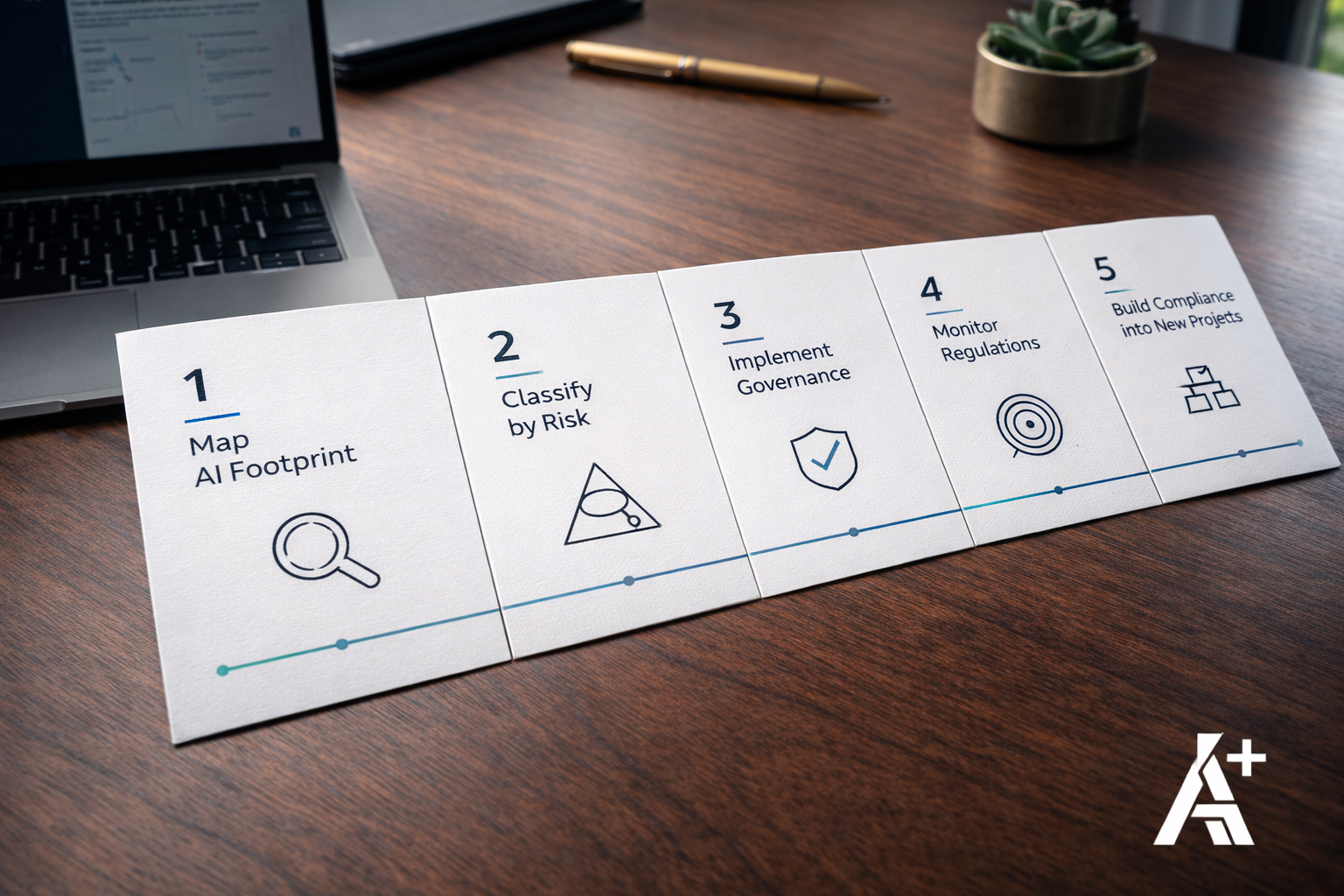
Step 1: Map Your AI Footprint
Most businesses don't have a complete picture of where and how they're using AI. Start by inventorying every AI tool, agent, and integration in your organization. This includes obvious AI deployments like chatbots and AI agents, AI features embedded in software you already use (CRM, marketing tools, analytics), AI-powered decision-making in hiring, pricing, or customer service, and third-party AI services accessed through APIs.
You can't comply with regulations you don't know apply to you. A complete AI inventory is the foundation of compliance.
Step 2: Classify by Risk Level
Most AI regulation frameworks distinguish between high-risk and lower-risk AI applications. Classify your AI usage accordingly.
High risk (most regulation applies): AI making decisions about employment and hiring, AI in financial services (lending, insurance, trading), AI in healthcare (diagnosis, treatment recommendations), AI affecting housing decisions, AI in education (admissions, grading), and AI in law enforcement or legal contexts.
Moderate risk: AI in customer service and support, AI in marketing and content creation, AI in sales and lead qualification, and AI in internal operations and productivity.
Lower risk: AI in data analysis and reporting, AI in content recommendation, and AI in internal communication tools.
Focus your compliance efforts on high-risk applications first.
Step 3: Implement Core Governance Practices
Regardless of which specific regulations apply to you, certain governance practices are universally expected.
Documentation: Document how your AI systems work, what data they access, and what decisions they make. This includes system descriptions, data flows, decision logic, and known limitations.
Transparency: Be clear with customers, employees, and stakeholders when they're interacting with AI. Disclosure requirements are present in virtually every AI regulation.
Bias testing: If your AI makes decisions that affect people (hiring, lending, service access), test for bias regularly. Many regulations specifically require bias audits.
Human oversight: Ensure humans can review, override, and intervene in AI decisions, especially for high-stakes outcomes.
Audit trails: Maintain logs of AI decisions and actions that can be reviewed for compliance, debugging, and dispute resolution.
Step 4: Monitor the Regulatory Landscape
AI regulation is evolving rapidly. What's proposed today may be law tomorrow. Set up monitoring for regulatory changes in states where you operate, federal AI legislation progress, industry-specific AI guidance from relevant agencies, and international developments (especially the EU AI Act) if you have global operations.
Step 5: Build Compliance into New AI Deployments
For any new AI project, build compliance into the development process from the start. This is far cheaper and easier than retrofitting compliance after deployment.
When selecting AI development partners, choose teams that understand the regulatory landscape and build governance features into their systems by default.
How AI Agents Plus Builds Compliance-Ready AI
At AI Agents Plus, we build custom AI agents with regulatory compliance in mind from day one. Every agent we develop includes transparency features so users know they're interacting with AI, audit trails that log decisions and actions for compliance review, configurable guardrails that enforce business rules and compliance requirements, human escalation paths for high-stakes decisions, and documentation that supports regulatory reporting.
We stay current on AI regulation across federal and state levels, and we design our agents to meet the most stringent requirements. This means our clients don't need to rebuild when new regulations take effect. They're already compliant.
Whether you need customer service agents, sales automation, voice assistants, or workflow automation, we build AI solutions that deliver business results while meeting your compliance obligations.
Ready to deploy AI agents that are built for the regulatory future? Book a discovery call and we'll help you navigate the regulatory landscape while building AI solutions that drive real business value.
AI regulation 2026: Practical Implementation
Use AI regulation 2026 to remove repetitive tasks, improve response speed, and keep a clear handoff to your team for exceptions.
About AI Agents Plus
AI automation expert and thought leader in business transformation through artificial intelligence.