How to Build AI Agents for Business: A Complete 2026 Guide
Building AI agents for business is no longer just for tech giants. This complete guide walks you through planning, development, and deployment of autonomous AI systems that deliver real ROI.

Building AI agents for business isn't just for tech giants anymore. With the right approach and modern frameworks, companies of all sizes can deploy autonomous AI systems that handle everything from customer service to complex operational workflows. This guide walks you through how to build AI agents for business, from planning to production.
What Are AI Agents for Business?
AI agents are autonomous software systems that can perceive their environment, make decisions, and take actions to achieve specific goals without constant human oversight. Unlike simple chatbots that follow scripted responses, business AI agents can:
- Handle complex multi-step workflows
- Make decisions based on context and business rules
- Learn from interactions and improve over time
- Integrate with existing business systems
- Escalate to humans when necessary
Why Build AI Agents for Your Business?
The business case for AI agents is compelling:
Operational Efficiency: AI agents work 24/7 without breaks, handling routine tasks that would require multiple full-time employees. Companies report 40-60% reductions in operational costs for automated workflows.
Scalability: Unlike human teams, AI agents scale instantly. Whether you're handling 10 or 10,000 customer inquiries simultaneously, the response time remains consistent.
Consistency: AI agents follow defined processes exactly, eliminating human error and ensuring compliance with business policies and regulations.
Data-Driven Insights: Every interaction generates actionable data, helping you understand customer behavior, operational bottlenecks, and improvement opportunities.

How to Build AI Agents: The 5-Step Framework
1. Define Your Use Case and Success Metrics
Start with a specific problem, not a technology. The best AI agent projects begin with clear answers to:
- What specific task or workflow will the agent handle?
- What does success look like? (e.g., 80% automation rate, <2min response time)
- What's the cost of the current manual process?
- Where does the agent need to escalate to humans?
Best practice: Start small. Pick one repetitive, high-volume workflow rather than trying to automate everything at once. Customer inquiry routing, appointment scheduling, and data entry are proven starting points.
2. Choose Your AI Agent Framework
Modern AI agent development has become dramatically easier with purpose-built frameworks. Here are the leading options in 2026:
LangChain/LangGraph: Industry standard for complex agent workflows. Excellent for agents that need to chain multiple tools and maintain conversation state.
AutoGPT/AutoGen: Great for research and analysis tasks where the agent needs significant autonomy. Better for internal tools than customer-facing applications.
CrewAI: Specialized for multi-agent systems where different agents handle different aspects of a workflow.
Custom Frameworks: For enterprise deployments with specific compliance or integration requirements.
3. Build Your Agent's Tool Kit
AI agents are only as capable as the tools you give them. Your agent will need:
Data Access: Connection to your databases, CRMs, and business systems. Use APIs rather than giving agents direct database access for security.
Communication Tools: Email, Slack, SMS, or whatever channels your customers use.
Decision-Making Logic: Business rules, approval workflows, and escalation paths clearly defined.
Memory Systems: Both short-term (conversation context) and long-term (customer history, learned preferences) memory.
4. Implement Safety and Oversight
This is where many AI agent projects fail. You need multiple layers of protection:
Input Validation: Screen all user inputs for injection attacks and malicious content before your agent processes them.
Output Filtering: Review agent responses before they reach customers, especially for sensitive domains like healthcare or finance.
Human-in-the-Loop: Define clear escalation triggers. Your agent should recognize when it's out of its depth and hand off gracefully to human experts.
Audit Trails: Log every decision and action. When something goes wrong (and it will), you need to understand exactly what happened.
Rate Limiting: Prevent runaway processes that could rack up API costs or overwhelm your systems.
Common Mistakes to Avoid
Over-Promising Capabilities: AI agents excel at structured tasks with clear rules. They struggle with truly novel situations requiring human judgment. Set realistic expectations with stakeholders.
Insufficient Training Data: If your agent needs to understand domain-specific terminology or handle niche scenarios, you need enough examples. Plan for 3-6 months of supervised operation before full automation.
Ignoring Edge Cases: The 80/20 rule applies here. The first 80% of functionality takes 20% of the time. Those edge cases and error states will consume the rest of your schedule.
Skipping the Prototype Phase: Build a minimal viable agent and test it internally before exposing it to customers.
AI Agent Development Timeline and Costs
Timeline: Expect 8-16 weeks from concept to production for a focused use case:
- Weeks 1-2: Requirements and design
- Weeks 3-6: Development and tool integration
- Weeks 7-12: Testing, refinement, and safety validation
- Weeks 13-16: Phased rollout and monitoring
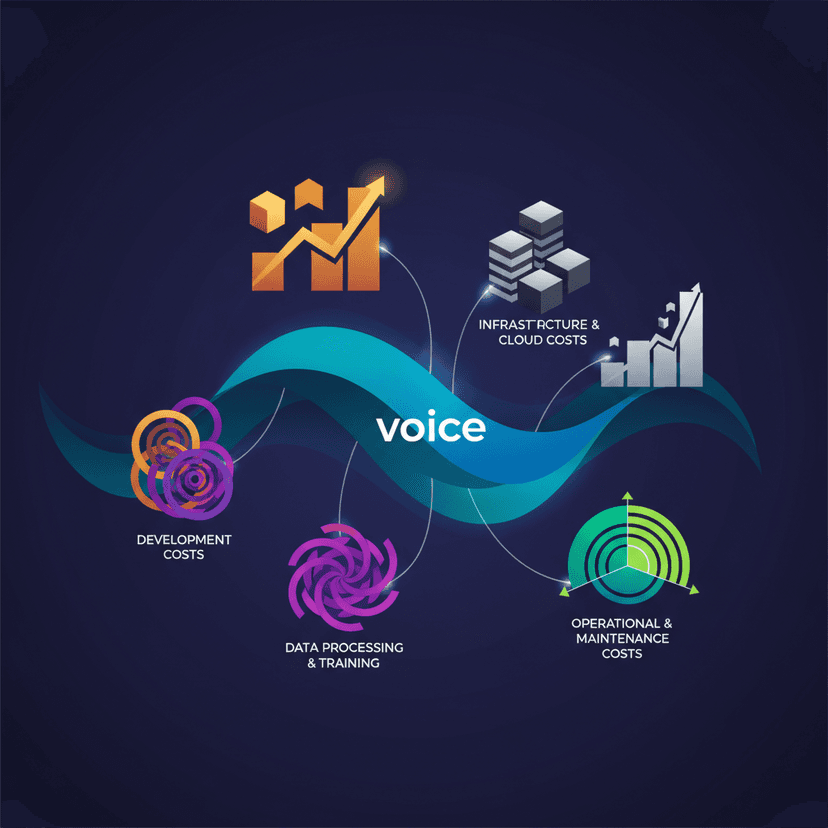
Costs: Development costs range from $15K-$75K for a production-ready agent, depending on complexity. Ongoing operational costs (LLM API calls, infrastructure) typically run $500-$5000/month based on usage volume.
Production Best Practices
Once your agent is live, continuous monitoring is essential:
- Track automation rate, escalation frequency, and user satisfaction
- Review flagged conversations weekly for improvement opportunities
- Update business rules as policies change
- Monitor costs and optimize expensive API calls
- Plan quarterly capability expansions based on user feedback
Conclusion
Building AI agents for business is no longer a moonshot project reserved for engineering teams at Google and Meta. With modern frameworks and a structured approach, companies can deploy capable agents in weeks, not years. The key is starting with a specific, high-value use case, building robust safety systems, and iterating based on real-world performance.
The businesses winning with AI agents in 2026 aren't necessarily the ones with the most advanced technology — they're the ones who shipped early, learned fast, and continuously refined their systems based on real user needs.
At AI Agents Plus, we help companies move from AI experiments to production systems that deliver real ROI. Whether you need custom AI agents, rapid prototyping, or voice AI solutions, let's talk about your automation challenges.
About AI Agents Plus Editorial
AI automation expert and thought leader in business transformation through artificial intelligence.