
Hyundai Commits $6.1B to AI Hub in South Korea — Why Automakers Are Becoming AI Infrastructure Players
Hyundai Motor Group signed a $6.1 billion deal to build an AI innovation hub in South Korea, with $4 billion dedicated to AI data center infrastructure. Here's why carmakers are betting big on compute.
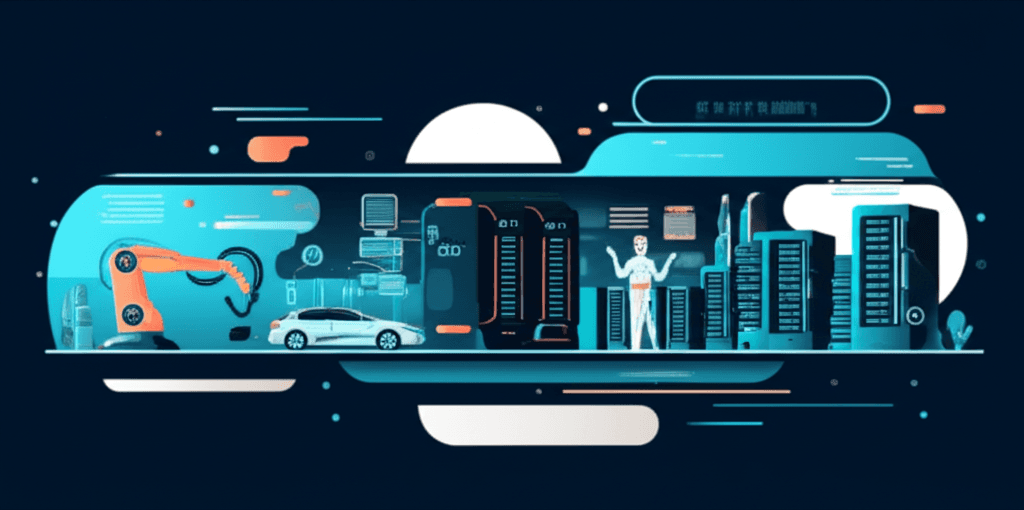
Hyundai Motor Group just announced a $6.1 billion investment in an AI innovation hub in South Korea. The largest chunk — $4 billion — is earmarked for AI data center infrastructure.
That's not a typo. One of the world's largest automakers is building AI compute capacity at a scale that rivals hyperscalers.
This isn't about manufacturing cars more efficiently. It's about Hyundai recognizing that autonomous vehicles, AI-powered manufacturing, and robotics all run on the same foundation: massive compute capacity.
What Hyundai Is Building
The $6.1 billion investment breaks down into:
$4 billion for AI data center infrastructure: Purpose-built compute clusters for AI training and inference. This isn't cloud rental — Hyundai is building owned capacity.
$2.1 billion for robotics and future tech: R&D facilities focused on humanoid robots, manufacturing automation, and advanced materials.
The hub will be located in South Korea, positioning Hyundai alongside Samsung and SK Hynix in the country's growing AI ecosystem.

Why Automakers Need AI Infrastructure
The automotive industry's relationship with AI has evolved rapidly:
Phase 1 (2015-2020): Buy AI from suppliers. Tesla was the exception, building in-house.
Phase 2 (2020-2024): Partner with tech companies. GM with Microsoft, Toyota with Amazon, VW with Google.
Phase 3 (2024+): Build proprietary AI infrastructure. Tesla's Dojo, Mercedes' data centers, now Hyundai.
Why the shift?
Autonomous driving requires proprietary training data. You can't differentiate your self-driving system if you're training on the same datasets as competitors. Hyundai needs exclusive access to compute for training models on its fleet data.
Manufacturing AI is competitive advantage. AI-powered quality control, supply chain optimization, and predictive maintenance deliver real cost savings. Running these workloads on public cloud means slower iteration and higher operational costs.
Robotics demands low-latency inference. Humanoid robots and manufacturing automation require real-time AI inference. Cloud latency doesn't cut it — you need on-premise or edge compute.
The Korea AI Ecosystem Play
Hyundai isn't building this in isolation. South Korea has been systematically positioning itself as an AI hardware powerhouse:
SK Hynix: Dominates HBM (high-bandwidth memory), the critical component for AI training chips. Supplies Nvidia, AMD, and others.
Samsung: Building AI chips (Mach-1), investing in foundry capacity for AI hardware, and developing proprietary AI models.
Naver and Kakao: Korea's tech giants are investing in large language models and AI agents.
Government backing: Korea announced a $1.1 billion AI venture fund in early 2026, plus regulatory fast-tracks for AI companies.
Hyundai's $6.1B investment slots into this broader strategy. The country is betting that controlling the full AI stack — from memory chips to data centers to applications — creates defensible competitive advantage.
What This Means For Your Business
If you're building AI products: Watch the infrastructure wars. Major players are vertically integrating — owning chips, compute, and models. That changes the cost structure and competitive dynamics for AI-dependent businesses.
If you're in manufacturing or logistics: Hyundai's move signals that AI infrastructure is becoming industry-specific, not general-purpose. Consider whether your industry will follow this pattern — and whether you should invest in owned compute vs renting from hyperscalers.
If you're evaluating AI strategy: The "rent vs build" calculus is shifting. Public cloud costs remain high for sustained AI workloads. If AI is core to your product, the math may favor owned infrastructure sooner than expected.
The Competitive Implications
This investment puts pressure on other automakers:
Tesla already operates the world's largest privately-owned AI supercomputer (Dojo). Hyundai's move narrows that advantage.
Traditional OEMs (GM, Ford, Toyota, VW) are still largely dependent on cloud partnerships. They're at risk of falling behind on AI-powered differentiation.
Chinese automakers (BYD, NIO, Xpeng) have been building AI infrastructure aggressively. Hyundai is catching up to competitive parity.
For the AI data center industry, this is a validation signal. Enterprise demand for on-premise AI compute is real and growing — not just for tech companies, but for manufacturers, energy companies, and logistics providers.
The Technical Bet: Physical AI
Hyundai's investment isn't just about autonomous vehicles. The robotics component is critical.
Physical AI — AI systems that interact with the physical world through robotics — requires:
- Real-time inference (cloud latency breaks the system)
- Massive sensor data processing (cameras, lidar, radar)
- Continuous model retraining (as robots encounter new scenarios)
That's fundamentally different from language models or image generators. It requires infrastructure optimized for:
- Low latency: Single-digit millisecond response times
- High throughput: Processing gigabytes/second of sensor data
- Edge deployment: Distributing compute to factory floors and vehicles
Hyundai is betting that physical AI — robots in factories, autonomous vehicles, humanoid assistants — will be a larger market than digital AI. That thesis requires owning the infrastructure.
Looking Ahead
Expect more industrial players to follow Hyundai's lead:
- Energy companies need AI compute for grid optimization and predictive maintenance
- Logistics providers require AI for route planning and warehouse automation
- Healthcare systems want proprietary AI for diagnostics and drug discovery
The hyperscaler cloud model works for startups and variable workloads. But for sustained, AI-first operations, the economics favor owned infrastructure.
Hyundai's $6.1B investment is a bet that the future of AI is vertical — industry-specific infrastructure optimized for domain-specific workloads.
For related coverage, see our analysis of how AI is transforming manufacturing and why physical AI is the next frontier.
The Bottom Line
Automakers are no longer just buying AI from tech companies. They're becoming AI infrastructure players themselves.
Hyundai's $6.1 billion investment signals that AI compute is strategic infrastructure, not a commodity service. Companies that own their AI stack will have cost advantages, faster iteration cycles, and the ability to differentiate on proprietary models.
The question for every AI-dependent business: Are you building on borrowed compute, or are you building to own?
Build AI That Works For Your Business
At AI Agents Plus, we help companies move from AI experiments to production systems that deliver real ROI. Whether you need:
- Custom AI Agents — Autonomous systems that handle complex workflows, from customer service to operations
- Rapid AI Prototyping — Go from idea to working demo in days using vibe coding and modern AI frameworks
- Voice AI Solutions — Natural conversational interfaces for your products and services
We've built AI systems for startups and enterprises across Africa and beyond.
Ready to explore what AI can do for your business? Let's talk →
About AI Agents Plus Editorial
AI automation expert and thought leader in business transformation through artificial intelligence.


