India AI Impact Summit Secures $250B+ in Commitments: The Third Pole in the Global AI Race Emerges
India's AI Impact Summit 2026 secured over $250 billion in infrastructure commitments and endorsement from 88 countries. With domestic models, OpenAI-Tata partnerships, and massive government backing, India is positioning itself as the third major force in global AI.
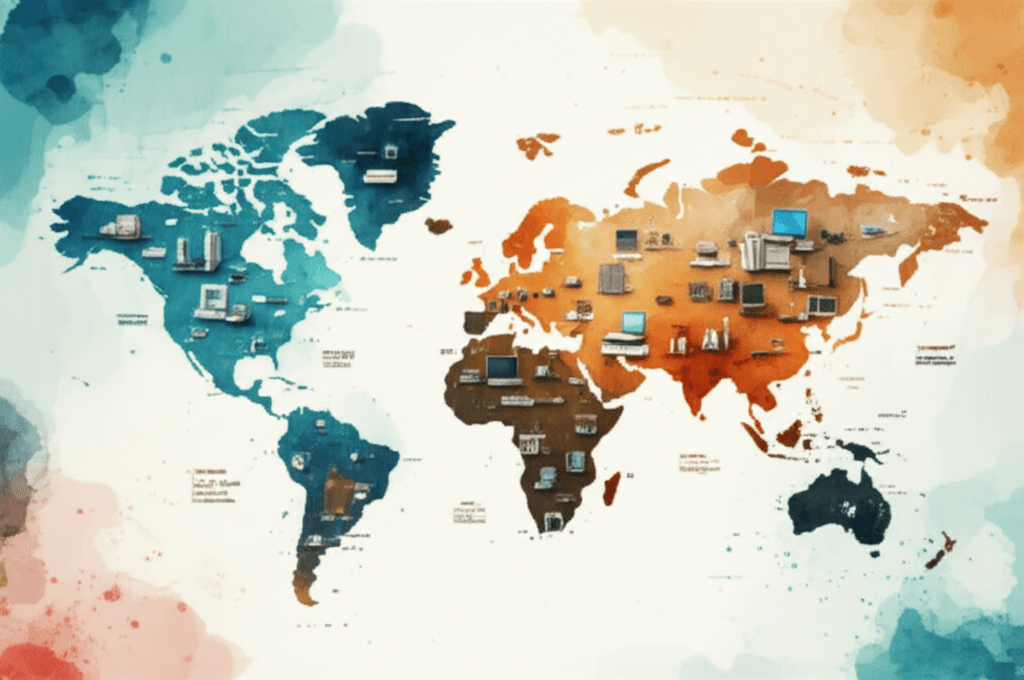
India's AI Impact Summit 2026, which concluded on February 21, secured investment commitments exceeding $250 billion for AI infrastructure and approximately $20 billion for venture capital deeptech investments. The summit also produced the New Delhi Declaration on AI Impact, endorsed by 88 countries and international organizations.
This isn't just another tech conference with ambitious announcements. India is making a serious play for AI sovereignty—and the numbers, partnerships, and policy commitments suggest they're building the infrastructure to compete with the US and China as a third pole in the global AI race.
The Scale of India's AI Ambition
The India AI Impact Summit 2026 was described by organizers as the "largest and most historic" AI summit to date. The commitments made signal India's intent:
$250+ billion in AI infrastructure: This includes data centers, compute capacity, networking infrastructure, and energy systems to power AI development at scale.
$20 billion in venture capital: Focused on deeptech AI startups, this creates a funding ecosystem for Indian AI innovation beyond the established tech giants.
88-country endorsement: The New Delhi Declaration establishes India as a convener for global AI governance discussions, positioning the country as a bridge between Western and non-Western AI ecosystems.
20,000 additional GPUs: Expanding India's existing 38,000 GPU compute capacity to 58,000+ GPUs, putting the country's AI compute infrastructure in the same conversation as European nations and major Asian economies.
Domestic AI Models: India Isn't Just Buying—It's Building
What makes India's AI push different from many other countries is the emphasis on domestic model development, not just infrastructure to run Western models.
Sarvam AI, an Indian startup, announced it had trained a 30-billion-parameter model and a 105-billion-parameter model from scratch using a mixture-of-experts architecture. This isn't fine-tuning GPT or Claude—this is building foundation models specifically designed for Indian languages, cultural contexts, and use cases.

The strategic logic is clear: India wants to avoid dependency on US or Chinese AI platforms, especially for government, defense, and critical infrastructure applications. By building domestic models, India gains:
- Data sovereignty: Training data stays in India, addressing privacy and security concerns
- Language support: Better performance on India's 22+ official languages and hundreds of regional dialects
- Cultural alignment: Models trained on Indian contexts perform better for Indian use cases
- Economic capture: Revenue and talent stay in the Indian ecosystem rather than flowing to US tech giants
Major Partnerships Signal Global Integration
While India is building domestic capabilities, it's also securing strategic partnerships with global AI leaders:
OpenAI + Tata Group: OpenAI announced a partnership with Tata, one of India's largest conglomerates. This likely involves deploying OpenAI models on Tata's cloud infrastructure and potentially co-developing solutions for Indian markets.
AMD + Tata Group: AMD announced partnerships with Tata, likely focused on providing chips and infrastructure for AI compute expansion.
Google AI Centers of Excellence: Google committed $8 million in grants for India's AI Centers of Excellence, supporting research and talent development.
These partnerships show India playing a smart dual strategy: build domestic alternatives while also integrating with the global AI ecosystem to accelerate deployment and learning.
AI Mission 2.0: Government Commitment Beyond Infrastructure
The Indian government is preparing to launch AI Mission 2.0, a policy framework that will likely include:
- Regulatory clarity for AI development and deployment
- Public sector AI adoption mandates (similar to digital India initiatives)
- Research funding for universities and AI institutes
- Talent development programs to scale India's AI workforce
- Export promotion for Indian AI startups
India's government has historically been effective at driving tech adoption through public sector mandates (see: digital payments via UPI, Aadhaar digital identity). If AI Mission 2.0 follows that playbook, expect rapid AI adoption across government services, which will create demand for domestic AI solutions and train millions of Indian citizens to interact with AI systems.
The Indian AI Startup Ecosystem
The summit featured over 110 AI startups and non-profits deploying AI for population-scale social and economic impact. These aren't consumer apps—they're systems addressing:
- Agricultural productivity (crop monitoring, pest detection, yield optimization)
- Healthcare access (diagnostic tools, telemedicine, drug discovery)
- Education (adaptive learning, language support, skill training)
- Infrastructure (traffic management, energy optimization, urban planning)
- Financial inclusion (credit scoring, fraud detection, micro-lending)
India's AI startup scene is solving problems that affect billions of people globally, not just in India. Solutions built for India's scale, linguistic diversity, and infrastructure constraints can export to Southeast Asia, Africa, the Middle East, and Latin America.
What This Means for the Global AI Race
India's emergence as a serious AI competitor changes the dynamics:
For US AI companies: India represents a massive market (1.4+ billion people) that's increasingly willing to support domestic alternatives if they're competitive. US companies need to offer more than just superior models—they need partnerships, localization, and data sovereignty guarantees.
For Chinese AI companies: India is geopolitically aligned against deeper dependence on Chinese technology. This creates opportunities for Western AI companies, but also incentivizes India to build its own alternatives to avoid dependence on either the US or China.
For smaller countries: India's model—massive infrastructure investment + domestic model development + strategic global partnerships—provides a template for other large developing economies (Brazil, Indonesia, Nigeria) to follow.
For talent: India already supplies a significant portion of global AI talent working in US and European companies. If India creates a competitive domestic AI ecosystem, some of that talent will stay or return, accelerating India's progress.
What This Means For Your Business
If you're building or buying AI solutions, India's AI push has practical implications:
-
Indian AI talent is getting cheaper to access remotely: As India builds its AI ecosystem, the quality and availability of Indian AI engineers increases. For companies building AI products, India is increasingly viable as a development hub.
-
Watch Indian AI startups for B2B solutions: Indian companies building for India's scale and complexity often create robust, cost-effective solutions that work well for emerging markets globally.
-
Data localization requirements are coming: If you operate in India or plan to, expect stricter data sovereignty and localization requirements. Indian regulators will use AI as leverage to keep data and compute infrastructure within India.
-
Partnership opportunities: Indian companies are actively looking for global partners to scale their AI solutions. If you're in fintech, healthtech, agritech, or edtech, Indian AI startups may offer partnership opportunities for expansion into South Asia, Africa, or the Middle East.
Looking Ahead
India's AI ambitions will be tested by execution. $250 billion in commitments doesn't mean $250 billion deployed—watch for:
- Actual infrastructure buildout (data centers coming online, GPU capacity increasing)
- Performance benchmarks from domestic models like Sarvam AI
- AI adoption metrics in public sector services (health, education, government)
- Regulatory clarity from AI Mission 2.0
- International collaborations and export growth from Indian AI startups
If India executes even half of what was announced at the AI Impact Summit, the global AI landscape will be a three-way race: US innovation and capital, China's manufacturing scale and domestic market, and India's talent, cost efficiency, and democratic governance model.
The AI race just got more interesting.
Build AI Solutions for Global Markets
At AI Agents Plus, based in Nairobi, we understand what it takes to build AI systems that work across diverse markets, languages, and infrastructure constraints.
Our expertise:
- Custom AI Agents — Autonomous systems for customer service, operations, and workflow automation
- Rapid AI Prototyping — Go from idea to working demo in days, production in weeks
- Voice AI Solutions — Natural conversational interfaces that work across languages and accents
- Emerging Market AI Strategy — We help you navigate the unique challenges of deploying AI in Africa, Asia, and beyond
We've built AI systems for startups and enterprises across Africa and beyond.
Ready to build AI that works everywhere? Let's talk →
About AI Agents Plus Editorial
AI automation expert and thought leader in business transformation through artificial intelligence.