Meta and NVIDIA's Billion-Dollar AI Infrastructure Bet — Millions of GPUs, A Decade-Long Partnership
Meta commits to deploying millions of NVIDIA Blackwell GPUs and signs up for next-gen Rubin architecture before it ships. This isn't just a hardware buy — it's a full-stack partnership that locks Meta into NVIDIA's ecosystem for the next decade.
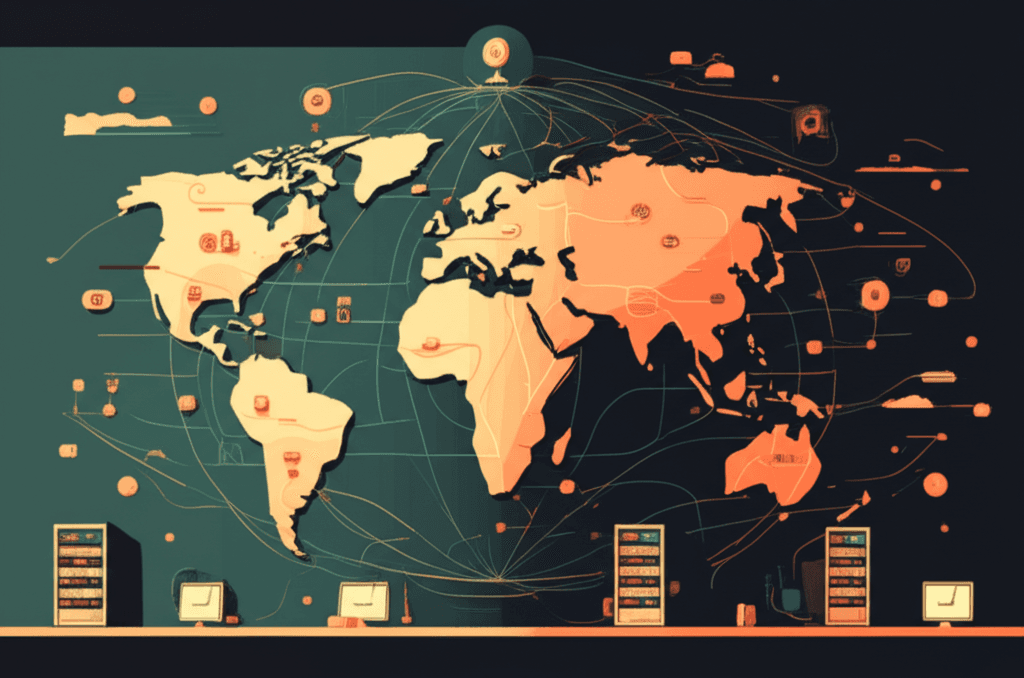
Meta and NVIDIA just announced a multi-year partnership that will see Meta deploy millions of NVIDIA Blackwell GPUs across its AI data center network — and commit to the upcoming Rubin architecture and Vera CPU before they even ship. This isn't just a big hardware buy. It's a decade-long bet on who controls the infrastructure layer of consumer AI.
The announcement came February 18, 2026, at a time when AI infrastructure spending is the single biggest line item on Big Tech balance sheets. Mark Zuckerberg framed it as necessary to deliver "personal superintelligence" — Meta's vision of AI assistants that know you better than your closest friends.
Wall Street loved it. NVIDIA's stock jumped 7%, and Meta's rose 4%. The market sees this as validation that AI infrastructure spending isn't slowing down — it's accelerating.
What's In The Deal
Here's what Meta is committing to:
Immediate Blackwell deployment: Millions of NVIDIA's latest Blackwell GPUs will go into Meta's data centers starting now. Blackwell is NVIDIA's current flagship AI chip, designed for trillion-parameter model training and inference.
Future Rubin adoption: Meta has signed on for NVIDIA's next-generation Rubin GPU architecture, expected in 2027. This is unusual — enterprises don't typically commit to hardware that hasn't shipped yet. It signals deep architectural co-design between the two companies.
Vera CPU integration: Meta will use NVIDIA's standalone Vera CPUs, marking a shift away from reliance on Intel and AMD processors in certain workloads.
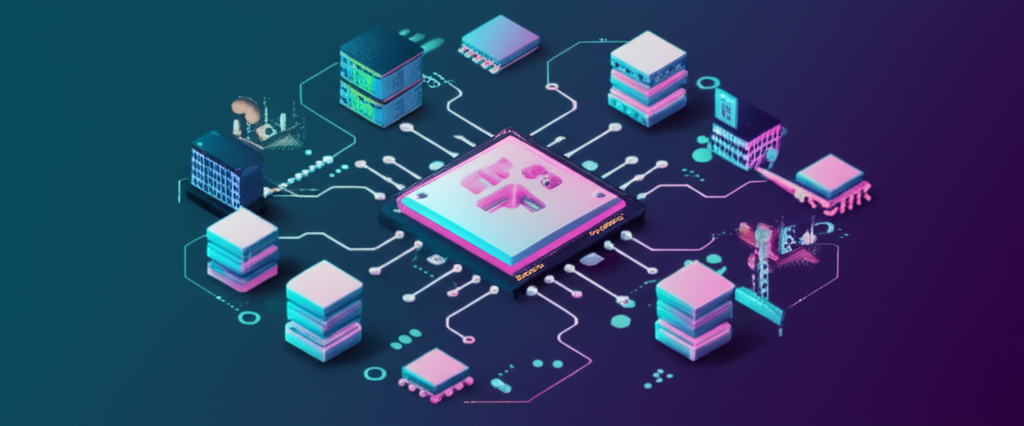
Spectrum-X networking: Meta will integrate NVIDIA's Spectrum-X Ethernet switches into its data center fabric, optimizing network throughput for AI training jobs.
This is a full-stack AI infrastructure partnership, not just a GPU purchase agreement. Meta is essentially saying: "NVIDIA's roadmap is our roadmap."
Why This Is Strategic (Not Just Expensive)
The obvious read is that Meta needs more compute to stay competitive. That's true, but it misses the deeper play.
1. Compute is the new competitive moat
In the AI era, your model quality is directly tied to how much compute you can throw at training and inference. Meta is spending tens of billions on NVIDIA hardware because not doing so would leave them dependent on cloud providers (AWS, Google Cloud, Azure) who are also their competitors in consumer AI.
2. First-mover advantage on next-gen architectures
By committing to Rubin GPUs before they ship, Meta gets early access to NVIDIA's roadmap. That means their AI teams can start optimizing models for Rubin's architecture while competitors are still benchmarking on Blackwell. In AI infrastructure, a 6-month lead is enormous.
3. Vertical integration into networking
The Spectrum-X networking piece is underrated. AI training jobs are bottlenecked by inter-GPU communication as much as raw compute. By deploying NVIDIA's networking stack, Meta is optimizing for the specific communication patterns of large language model training — reducing wasted cycles and improving utilization rates.
4. Signaling durability to investors
Meta has been under pressure to prove that its massive AI spending ($50B+ in 2025-2026) will translate into revenue. This partnership signals that they're not pulling back — they're doubling down. It's a bet that AI assistants, AR glasses, and personalized feeds will justify the expense.
What "Personal Superintelligence" Means
Zuckerberg keeps using this phrase, and it's worth unpacking.
Meta's vision isn't ChatGPT-style general Q&A. It's hyper-personalized AI agents that:
- Know your social graph, preferences, and history across Meta's platforms (Facebook, Instagram, WhatsApp)
- Can act on your behalf (schedule, book, negotiate, recommend)
- Run inference locally on your device or at the edge (hence the need for massive distributed compute infrastructure)
This requires a fundamentally different AI architecture than cloud-hosted chatbots. You need:
- Distributed inference across millions of edge nodes (phones, AR glasses, VR headsets)
- Continuous learning from user interactions (not just static model deployments)
- Privacy-preserving compute (on-device processing to avoid sending sensitive data to the cloud)
NVIDIA's hardware roadmap — especially Vera CPUs for edge deployment and Spectrum-X for low-latency networking — aligns perfectly with this vision.
The NVIDIA Lock-In Question
Here's the uncomfortable truth: Meta is now deeply locked into NVIDIA's ecosystem.
If a competitor (AMD, Intel, or a new entrant like Cerebras or Groq) releases a faster, cheaper AI chip, Meta can't easily switch. They've committed to Rubin, Vera, and Spectrum-X. Their training pipelines, model architectures, and infrastructure tooling are all optimized for NVIDIA's stack.
This is exactly how NVIDIA likes it. Hardware commoditization is NVIDIA's nightmare scenario. By getting hyperscalers like Meta to commit to multi-year, full-stack partnerships, they're building switching costs that make it prohibitively expensive to migrate away.
For Meta, this is a calculated risk. If NVIDIA executes on Rubin and maintains its performance lead, Meta wins. If NVIDIA stumbles or a competitor leapfrogs them, Meta is stuck.
What This Means For Your Business
If you're building AI infrastructure, the Meta-NVIDIA deal has three implications:
1. Cloud vs. on-prem is getting redrawn
Meta's strategy is owning its compute infrastructure. If you're betting your AI strategy on renting GPUs from AWS or Azure, you're competing against companies that own their stack. That's fine for early-stage experimentation, but if AI becomes core to your product, you'll eventually need to evaluate whether owning infrastructure makes sense.
2. NVIDIA's pricing power is real
This deal confirms that NVIDIA can command premium pricing because there's no credible alternative at scale (yet). If you're buying GPUs, plan for continued price increases unless AMD or Intel force competition. NVIDIA knows it's the only game in town.
3. Edge AI is coming faster than you think
Meta's emphasis on "personal superintelligence" signals a shift from cloud-hosted models to edge deployment. If your AI product roadmap assumes centralized cloud inference forever, revisit that assumption. Devices are getting powerful enough to run billion-parameter models locally, and users increasingly prefer on-device processing for privacy reasons.
Looking Ahead
The Meta-NVIDIA partnership sets a new baseline for AI infrastructure spending. If Meta is deploying millions of Blackwell GPUs and committing to the next generation sight-unseen, other hyperscalers will feel pressure to match.
Expect similar announcements from Microsoft (for OpenAI), Google (for DeepMind), and Amazon (for AWS AI services). The AI arms race isn't slowing — it's escalating into a multi-decade infrastructure buildout that will define which companies dominate consumer AI.
For businesses outside the hyperscaler tier, the lesson is clear: you can't out-spend Meta on compute, so don't try. Instead, focus on:
- Model efficiency — get better results from smaller, cheaper models
- Domain-specific optimization — build narrow AI that solves your specific problem better than general-purpose models
- Strategic partnerships — rent compute, partner with platforms, or build on open-source foundations
The era of AI infrastructure as competitive advantage is here. Meta and NVIDIA are betting billions on it. Make sure your strategy accounts for that reality.
Build AI That Works For Your Business
At AI Agents Plus, we help companies move from AI experiments to production systems that deliver real ROI. Whether you need:
- Custom AI Agents — Autonomous systems that handle complex workflows, from customer service to operations
- Rapid AI Prototyping — Go from idea to working demo in days using modern AI frameworks
- AI Infrastructure Strategy — Figure out whether to build, buy, or rent your AI compute
We've built AI systems for startups and enterprises across Africa and beyond.
Ready to explore what AI can do for your business? Let's talk →
About AI Agents Plus Editorial
AI automation expert and thought leader in business transformation through artificial intelligence.