Nvidia Acquires Illumex for $60M: Enterprise Knowledge Graphs Meet AI Inference
Nvidia just acquired Illumex, a startup that transforms enterprise knowledge into AI-ready semantic ontologies, for an estimated $60 million. This signals Nvidia's push beyond chips into the enterprise AI software stack.
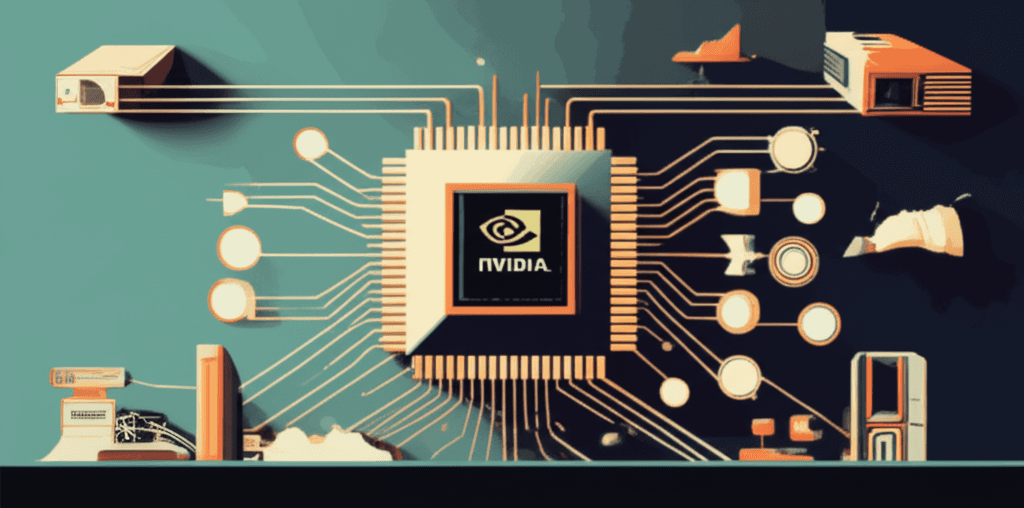
Nvidia has acquired Illumex for an estimated $60 million. The Israeli startup builds the Generative Semantic Fabric (GSF) platform, which transforms an organization's corpus of knowledge into AI-ready, context-rich semantic ontologies.
This isn't Nvidia's usual play. The chip giant typically focuses on hardware and low-level AI infrastructure. But acquiring Illumex signals a strategic shift: Nvidia is moving up the stack into enterprise AI software.
And that changes everything.
What Illumex Actually Does
Illumex solves a problem every enterprise faces when deploying AI: your company's knowledge is scattered, unstructured, and invisible to LLMs.
Most organizations have:
- Structured data — Databases, CRMs, ERPs with clean schemas
- Semi-structured data — Wikis, Confluence pages, Google Docs with some organization
- Unstructured data — Slack messages, emails, meeting recordings, PDF reports
LLMs struggle with this mess. They can't reliably answer "What's our pricing policy for enterprise customers in EMEA?" because that knowledge is spread across:
- A pricing deck in Google Drive (last updated 8 months ago)
- Slack messages from the sales team (conflicting information)
- An internal wiki page (outdated)
- The actual contracts in Salesforce (ground truth, but hard to access)

Illumex's Generative Semantic Fabric creates a unified semantic layer that:
- Ingests all enterprise data sources (databases, wikis, Slack, emails, PDFs)
- Extracts entities, relationships, and business logic using NLP
- Builds a semantic ontology — a knowledge graph that captures "what things are" and "how they relate"
- Serves this context to LLMs at inference time so they answer with company-specific accuracy
The result: LLMs that actually understand your business, not just generic internet knowledge.
Why Nvidia Wants Enterprise Knowledge Management
Nvidia dominates AI hardware — 95%+ market share in training, 85%+ in inference. But hardware is commoditizing. Custom chips from MatX, Groq, SambaNova, and cloud providers are coming.
Nvidia's strategy: own the full AI infrastructure stack, from silicon to software.
Here's the play:
1. Hardware lock-in through software
By offering enterprise knowledge management as a premium feature tied to Nvidia GPUs, they make it harder to switch to AMD or custom chips.
2. Capture enterprise AI spend
Enterprises will spend $300B+ on AI by 2028. Most of that goes to software and services, not chips. Nvidia wants a piece.
3. Compete with hyperscalers
AWS, Google Cloud, and Azure are building full-stack AI platforms. Nvidia needs software to sell directly to enterprises, not just through cloud providers.
4. Enable vertical AI agents
Knowledge graphs are critical for building domain-specific AI agents. Nvidia wants to power the agent revolution, not just the LLM layer.
Illumex gives Nvidia the missing piece: a way to make enterprise data AI-ready at scale.
The Enterprise AI Stack Is Consolidating
Nvidia's acquisition of Illumex follows a pattern we're seeing across the industry:
Databricks → Acquired MosaicML ($1.3B) for LLM training tools
Snowflake → Acquired Neeva for enterprise search and semantic layers
Salesforce → Built Einstein AI deeply integrated with CRM data
Microsoft → Copilot tightly coupled to Microsoft 365 data
Google → Gemini integrated with Workspace and enterprise knowledge
The winners in enterprise AI will be those who control both the data layer and the inference layer.
Nvidia is betting that enterprises will pay a premium for:
- GPUs optimized for inference
- Software that makes their data AI-ready
- Pre-built integrations with enterprise systems
- Support and professional services
This is the "Oracle playbook" — sell the database, then sell the applications, then lock in customers through integration complexity.
What This Means For Your Business
If you're deploying enterprise AI, here's what Nvidia's Illumex acquisition signals:
If you're building AI products for enterprises:
- Knowledge graphs and semantic layers are table stakes for vertical AI agents
- Expect tighter integration between hardware vendors and software platforms
- Don't assume you can just "plug in an LLM" — enterprises need context management
If you're buying enterprise AI:
- Vendor lock-in is coming. Nvidia, Microsoft, Google, and Salesforce will bundle hardware + software
- Evaluate multi-vendor strategies now before platforms become incompatible
- Invest in data infrastructure before AI tools — garbage in, garbage out still applies
If you're running AI infrastructure:
- Semantic layers will become as critical as vector databases in the AI stack
- Expect every major AI platform to offer knowledge graph capabilities within 12 months
- Plan for hybrid deployments: some workloads on vendor platforms, some self-hosted
The $60M Question: Is This a Talent Acquisition or a Platform Play?
Nvidia paid an estimated $60 million for Illumex. That's relatively small for an AI acquisition in 2026. Compare:
- Google → DeepMind: $500M (2014)
- Microsoft → Nuance: $19.7B (2021)
- Databricks → MosaicML: $1.3B (2023)
- Salesforce → Slack: $27.7B (2021)
At $60M, this could be:
Talent acquisition — Illumex's team joins Nvidia to build enterprise software from scratch. The GSF platform gets shelved or open-sourced.
Technology acquisition — Nvidia integrates GSF into its AI Enterprise software suite and charges premium licensing fees.
Defensive move — Prevent competitors (AMD, Intel, AWS) from acquiring Illumex and using it to differentiate their platforms.
My bet: Nvidia integrates Illumex into NeMo and AI Enterprise, positioning it as a premium feature for enterprises running large-scale AI deployments on Nvidia infrastructure.
Expect announcements at Nvidia GTC 2026 (March) showcasing:
- "NeMo Knowledge Fabric" for enterprise semantic layers
- Integration with NIM (Nvidia Inference Microservices)
- Pre-built connectors for Salesforce, Microsoft 365, SAP, Oracle
The Broader Trend: Vertical Integration in AI
We're watching the AI industry consolidate vertically:
Hardware layer → Nvidia, AMD, custom chip startups
Infrastructure layer → AWS, GCP, Azure, Oracle Cloud
Data layer → Databricks, Snowflake, semantic platforms (Illumex)
Model layer → OpenAI, Anthropic, Google, Meta
Application layer → Salesforce, Microsoft, vertical AI startups
The companies that survive will either:
- Own multiple layers (Nvidia, Microsoft, Google)
- Dominate one layer and integrate deeply (Databricks, Snowflake)
- Serve a niche vertical end-to-end (Basis for accounting, Harvey for legal)
Middleware plays — tools that sit between layers without owning any — will get squeezed.
Looking Ahead
Nvidia's acquisition of Illumex is a small deal with big implications:
- Expect more acquisitions as hardware vendors buy enterprise software companies
- Knowledge graphs become essential for production AI systems
- Vendor bundling intensifies — you'll buy chips + software + services as a package
- Open-source alternatives emerge to fight vendor lock-in (Apache Jena, Neo4j, custom solutions)
The AI infrastructure wars are heating up. Nvidia just added a new weapon.
Build Enterprise AI That Actually Works
At AI Agents Plus, we help companies implement production-ready AI systems that integrate with your existing data infrastructure. Whether you need:
- Knowledge Graph Implementation — Connect your structured and unstructured data for AI-ready context
- Custom AI Agents — Build domain-specific autonomous systems that understand your business
- Multi-Vendor AI Strategy — Design infrastructure that avoids vendor lock-in while maximizing performance
We've deployed AI systems for startups and enterprises across Africa and beyond that deliver real ROI, not just demos.
Ready to implement enterprise AI that scales? Let's talk →
About AI Agents Plus Editorial
AI automation expert and thought leader in business transformation through artificial intelligence.