
SambaNova Raises $350M for AI Inference Chips — Why SoftBank Is Betting on the "Boring" Side of AI
While everyone obsesses over training the next frontier model, SambaNova just raised $350 million to dominate AI inference. SoftBank is the first customer deploying the SN50 chip in Japan. Here's why inference infrastructure might be the better bet.
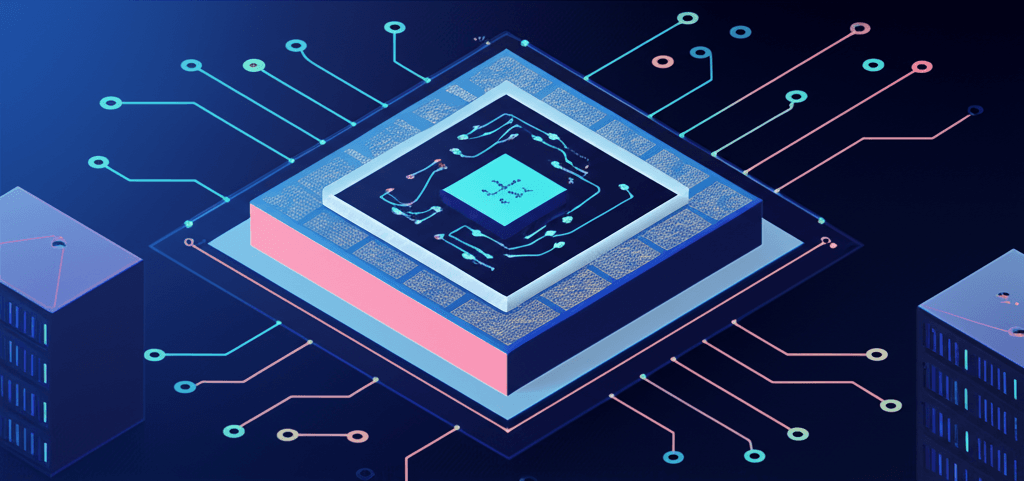
Training AI models gets the headlines. Inference gets the revenue.
That's the thesis behind SambaNova Systems' $350 million Series D funding round, led by Vista Equity Partners and Cambium Capital, with participation from Intel Capital. More importantly: SoftBank Corp signed on as the first customer to deploy SambaNova's SN50 inference chips in its Japanese AI data centers.
The market is finally waking up to a simple truth: for every dollar spent training a model, companies will spend hundreds of dollars running it in production. And the hardware optimized for training isn't necessarily optimal for inference.
What SambaNova Actually Does
SambaNova builds custom silicon specifically designed for AI inference workloads. Unlike Nvidia's GPUs — which are general-purpose parallel processors adapted for AI — SambaNova's chips are purpose-built from the ground up for running trained models at scale.
The key differentiators:
- Reconfigurable dataflow architecture: The chip can dynamically adjust its processing pipeline based on the model's needs
- Memory optimization: Inference requires less raw compute but more efficient memory access patterns
- Lower power consumption: Critical for data centers running 24/7 inference at scale
- Cost per token: The metric that actually matters for production deployments
The SN50 chip, which SoftBank will deploy first, is designed specifically for large language model inference — the workload driving most enterprise AI spending right now.

Why Inference Is the Real Business
Here's the uncomfortable truth for companies that invested billions in training infrastructure: training a frontier model is a one-time (or periodic) expense. Running it is continuous.
Consider the economics:
Training GPT-4: ~$100 million one-time cost (estimated) Running GPT-4 at scale: Billions per year in inference costs
OpenAI reportedly spends more on inference than it brings in revenue. Meta runs Llama inference across hundreds of thousands of GPUs. Google serves Gemini queries on custom TPUs that cost hundreds of millions to operate annually.
This is why Sam Altman keeps talking about the need for more energy and compute — not for training, but for inference. The usage is exploding faster than infrastructure can scale.
The Intel Capital Connection
Intel's participation in this round is particularly telling. Intel has been losing ground in the AI accelerator market to Nvidia, AMD, and custom chips from hyperscalers. But inference is where Intel still has a credible play.
Intel's Gaudi accelerators target inference workloads. Their Habana Labs acquisition was all about inference. And now they're backing SambaNova, which directly competes with Nvidia on inference but doesn't try to beat them at training.
The strategic message: training is Nvidia's game, but inference is up for grabs.
The Japan Angle
SoftBank deploying SN50 chips in Japan is more significant than it might appear. Japan is making a major push into AI infrastructure, and SoftBank is at the center of it.
Japan's AI strategy focuses on:
- Building sovereign AI capability (not dependent on US cloud providers)
- Energy-efficient data centers (critical in a country with expensive power)
- Serving domestic LLMs in Japanese (which have different inference characteristics than English models)
SambaNova's chips are well-suited for this: lower power consumption, optimized for production workloads, and flexible enough to handle Japanese language models efficiently.
SoftBank choosing SambaNova over Nvidia or in-house alternatives signals confidence that specialized inference chips can compete on performance and economics.
What This Means For Your Business
If you're building or buying AI systems, the inference vs. training distinction matters:
-
If you're deploying AI in production: Don't assume you need the same hardware for inference that you'd use for training. Specialized inference chips can cut your TCO by 50-70%.
-
If you're evaluating AI vendors: Ask about their inference infrastructure. A vendor running on expensive training-class GPUs is probably passing those costs to you.
-
If you're planning AI infrastructure investment: The shortage isn't in training chips anymore — it's in cost-effective inference hardware that can handle millions of requests per day.
The Broader Market Shift
SambaNova is part of a larger trend: AI infrastructure is fragmenting into specialized layers.
Training chips: Nvidia H100/H200, Google TPU v5, custom silicon from Meta/Microsoft
Inference chips: SambaNova, Groq, Cerebras (increasingly optimized for inference), AWS Inferentia, Google TPU inference variants
Edge inference: Qualcomm, Apple Neural Engine, specialized mobile chips
The one-size-fits-all GPU approach is giving way to purpose-built architectures. Training and inference are different enough workloads that different silicon makes sense.
The Risk
SambaNova faces real challenges. Nvidia isn't sitting still — their next-gen Blackwell chips promise better inference performance. Hyperscalers are building their own inference chips (AWS Inferentia, Google TPU, Meta MTIA). And software optimization keeps squeezing more performance out of existing hardware.
But the $350M round — and SoftBank's willingness to be the first production customer — suggests the market sees room for specialized players. Especially in regions like Japan where energy efficiency and sovereignty matter as much as raw performance.
Looking Ahead
The AI chip market is maturing from "throw money at training" to "optimize for production economics." That shift favors companies like SambaNova that focused on the unsexy but profitable inference layer.
Watch for more enterprise deployments, particularly in industries where inference costs are becoming a P&L line item: financial services (real-time fraud detection), healthcare (diagnostic AI), customer service (conversational AI), and developer tools (code completion).
If inference costs drop 50% while model quality holds steady, a lot more AI applications suddenly become economically viable. That's the real unlock — not faster training, but cheaper production deployment.
SambaNova bet on inference when everyone else was betting on training. The $350M round suggests they might have called it right.
Build Cost-Effective AI Systems
At AI Agents Plus, we help businesses design AI systems that actually make economic sense in production. From architecture selection to inference optimization, we build systems that deliver ROI, not just impressive demos.
Ready to build AI that pencils out? Let's talk →
About AI Agents Plus Editorial
AI automation expert and thought leader in business transformation through artificial intelligence.


