AI Enterprise Solutions: From Proof of Concept to Production at Scale
Learn how to build production-grade AI systems that scale across enterprise environments, integrating with legacy systems while delivering measurable ROI and maintaining security.
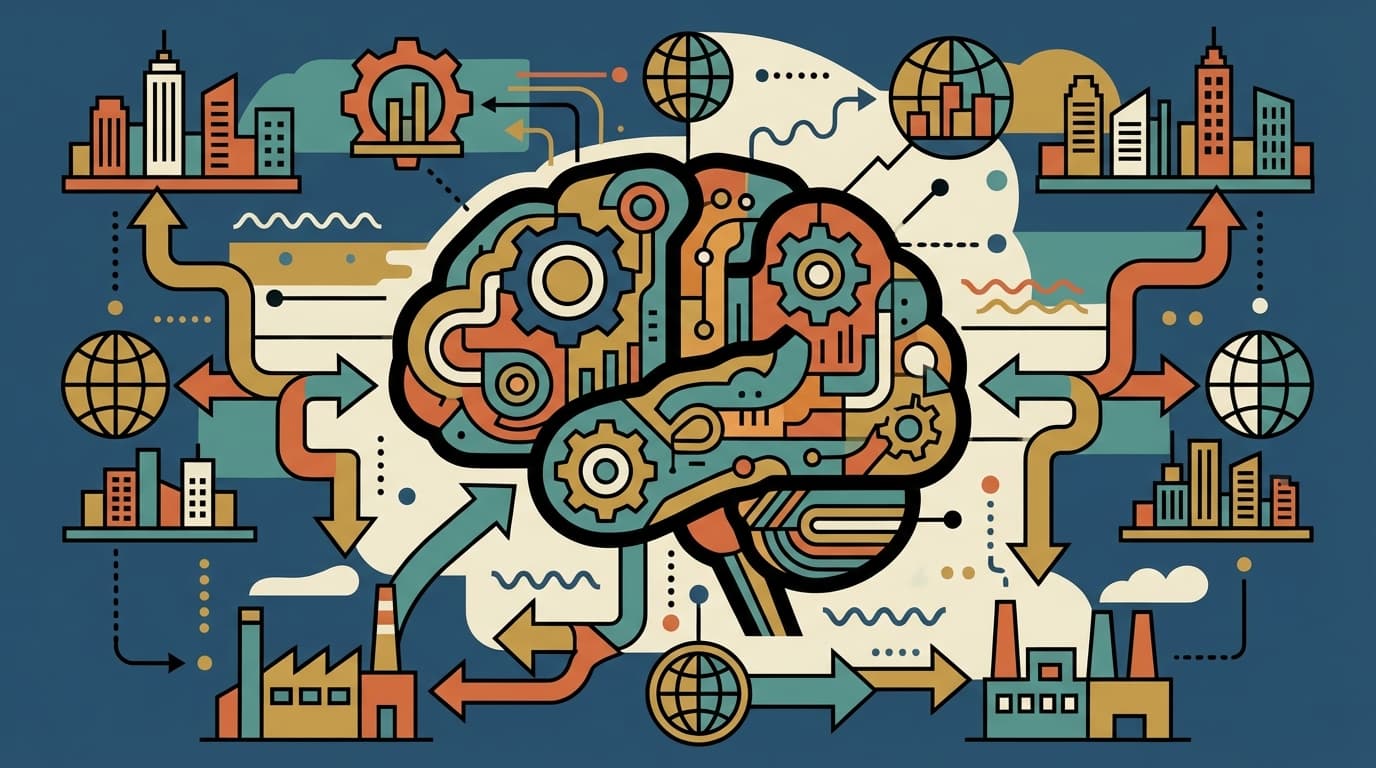
AI Enterprise Solutions: From Proof of Concept to Production at Scale
The gap between AI demonstrations and AI enterprise solutions that deliver measurable business impact is vast. Most organizations get stuck in pilot purgatory — impressive demos that never make it to production. This guide shows how to build AI systems that scale, integrate, and drive real ROI across enterprise environments.
What are AI Enterprise Solutions?
AI enterprise solutions are production-grade AI systems designed for large organizations with complex workflows, regulatory requirements, and integration challenges. Unlike consumer AI tools or startup MVPs, enterprise AI must handle:
- Scale — Thousands of users, millions of transactions, petabytes of data
- Security — Compliance with SOC 2, GDPR, HIPAA, industry-specific regulations
- Integration — Seamless connection to legacy systems, ERPs, CRMs, data warehouses
- Governance — Auditability, explainability, human-in-the-loop oversight
- Reliability — 99.9%+ uptime, disaster recovery, failover systems
The difference between a chatbot demo and an enterprise AI solution is the difference between a bicycle and a cargo ship — similar principles, completely different engineering.
Why Enterprises Need Purpose-Built AI Solutions
Generic AI tools don't fit enterprise needs. ChatGPT is powerful for individuals, but enterprises require:
- Data sovereignty — Keep proprietary data within corporate firewalls
- Custom training — Models fine-tuned on company-specific knowledge
- Workflow integration — AI embedded in existing processes, not separate tools
- Cost predictability — Fixed infrastructure costs, not per-query API fees that scale unpredictably
- Control and customization — Behavior aligned with brand voice, legal constraints, operational policies
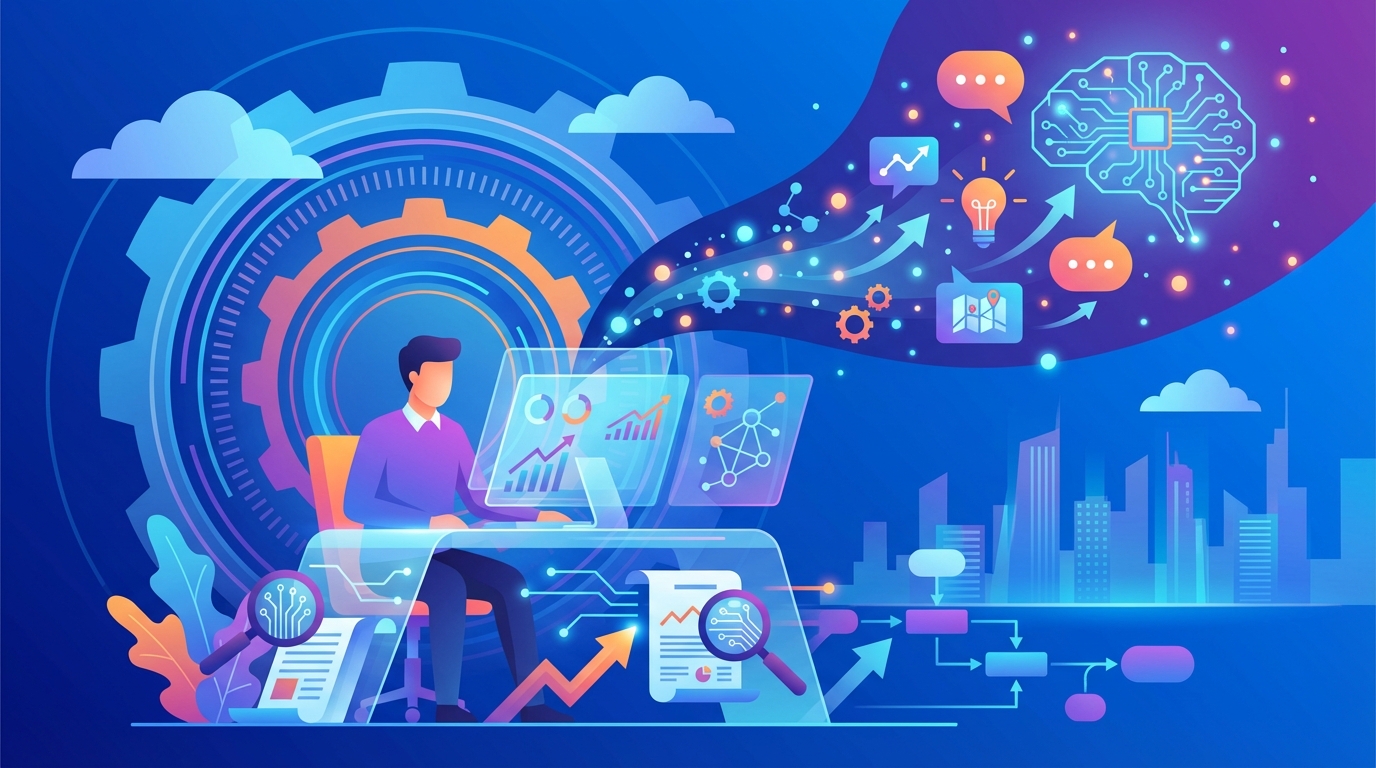
Key Components of AI Enterprise Solutions
Intelligent Process Automation
AI doesn't just automate tasks — it handles entire workflows:
Invoice Processing:
- OCR extracts data from PDFs and scanned documents
- AI validates against purchase orders and contracts
- Exception handling routes anomalies to human reviewers
- Auto-approves routine invoices, flags fraud or errors
Customer Service:
- AI triages support tickets by urgency and category
- Suggests responses for agents or auto-resolves common issues
- Escalates complex cases with full context to specialists
- Analyzes sentiment to prioritize frustrated customers
HR & Recruiting:
- Resume screening and candidate ranking
- Interview scheduling and initial screening calls (voice AI)
- Onboarding automation with personalized training paths
Enterprise Search and Knowledge Management
Large organizations drown in data. AI enterprise solutions surface the right information:
- Semantic search — Find documents by meaning, not just keywords
- RAG (Retrieval-Augmented Generation) — AI answers questions by pulling from company knowledge bases
- Cross-system queries — Search across Sharepoint, Confluence, Salesforce, email archives simultaneously
- Expertise location — Identify which employee has relevant experience for specific projects
Predictive Analytics and Decision Intelligence
AI moves from descriptive (what happened?) to predictive (what will happen?) to prescriptive (what should we do?):
Supply Chain Optimization:
- Demand forecasting incorporating market signals, weather, events
- Inventory optimization to minimize holding costs while preventing stockouts
- Logistics routing adjusted in real-time for disruptions
Financial Planning:
- Cashflow forecasting with scenario modeling
- Fraud detection across transactions
- Risk scoring for credit decisions
Sales and Marketing:
- Lead scoring and next-best-action recommendations
- Churn prediction with proactive retention campaigns
- Pricing optimization based on demand elasticity and competitive dynamics
Compliance and Risk Management
AI doesn't replace compliance teams — it augments them:
- Document review — Flag contracts with non-standard clauses
- Trade monitoring — Identify potential insider trading or market manipulation
- Data governance — Detect sensitive information (PII, PCI) in documents and databases
- Regulatory reporting — Auto-generate compliance reports from operational data
Building AI Enterprise Solutions: Best Practices
Start with High-ROI, Low-Risk Use Cases
Don't begin with mission-critical systems. Prove value where:
- Clear metrics exist — Time saved, cost reduced, revenue increased
- Failure is low-consequence — Non-customer-facing, reversible decisions
- Data is available — Historical data for training, real-time feeds for inference
Examples: Email classification, meeting summarization, internal chatbots for HR policies.
Design for Integration from Day One
Enterprise AI fails when it lives in isolation. Plan integration architecture:
- APIs and webhooks — Connect to Salesforce, SAP, Workday
- SSO and access control — Respect existing identity management (Okta, Azure AD)
- Data pipelines — ETL from warehouses (Snowflake, BigQuery), real-time streams (Kafka)
If your AI requires manual data export/import, adoption will fail.
Implement Robust Monitoring and Observability
AI systems degrade over time. Monitor:
- Model performance — Accuracy, precision, recall on production data
- Data drift — Detect when input distributions change (indicating retraining needed)
- Latency and uptime — SLA compliance for user-facing features
- Cost tracking — Compute spend, API usage, inference costs
Set up alerts before problems become crises.
Build for Explainability and Auditability
Enterprise AI decisions must be defensible:
- Audit logs — Track which model version made which decision when
- Explainability — Provide reasoning for AI recommendations (LIME, SHAP)
- Human override — Always allow experts to veto AI decisions
- Bias monitoring — Detect and mitigate demographic or historical biases in predictions
Regulators, auditors, and legal teams need answers when AI makes controversial decisions.
Prioritize Security and Data Governance
Enterprises can't afford data breaches or regulatory violations:
- Data encryption — At rest and in transit
- Access controls — Role-based permissions, least-privilege principles
- Data residency — Keep regulated data in specific geographies (EU for GDPR, etc.)
- Model security — Protect against adversarial attacks, prompt injection, data poisoning
Security isn't a feature — it's table stakes for enterprise AI.
Common Mistakes in Enterprise AI Deployments
Pilot purgatory — Running endless POCs without committing to production. Set clear success criteria upfront.
Ignoring change management — Even great AI fails if users resist adoption. Involve stakeholders early, train thoroughly, and communicate value clearly.
Over-customization — Building entirely bespoke AI when 80% of needs could be met with configurable platforms. Balance flexibility with maintainability.
Underestimating data quality requirements — Garbage in, garbage out. Budget time and money for data cleaning, labeling, and pipeline reliability.
Neglecting ongoing costs — Initial development is often cheaper than long-term maintenance, retraining, and infrastructure. Model total cost of ownership.
The ROI of AI Enterprise Solutions
Quantify value across multiple dimensions:
Cost reduction:
- Automating manual processes (invoice processing, data entry)
- Reducing errors and rework
- Optimizing resource allocation (inventory, staffing)
Revenue growth:
- Personalizing customer experiences to increase conversion
- Identifying upsell and cross-sell opportunities
- Accelerating sales cycles with AI-assisted prospecting
Risk mitigation:
- Detecting fraud and compliance violations before they escalate
- Predicting equipment failures to prevent downtime
- Identifying cybersecurity threats in real-time
Employee productivity:
- Eliminating repetitive admin tasks
- Surfacing relevant information faster
- Enabling better decision-making with predictive insights
Successful enterprise AI typically delivers 10-30% efficiency gains in targeted workflows within the first year.
The Future of Enterprise AI
Agentic AI — Moving beyond Q&A chatbots to autonomous agents that execute multi-step workflows independently.
Federated learning — Training AI across distributed data sources without centralizing sensitive information.
Multimodal AI — Systems that understand text, images, audio, video, and structured data together for richer context.
AI ops automation — Self-monitoring, self-healing AI systems that detect drift and retrain automatically.
Conclusion
AI enterprise solutions aren't about adopting the latest model — they're about engineering systems that integrate, scale, and deliver measurable business outcomes. The organizations winning with enterprise AI focus less on what's technically possible and more on what's operationally sustainable.
Done right, enterprise AI compounds value over time. Each workflow automated, each decision optimized, each insight surfaced builds momentum toward genuinely intelligent operations.
Build AI That Works For Your Business
At AI Agents Plus, we help companies move from AI experiments to production systems that deliver real ROI. Whether you need:
- Custom AI Agents — Autonomous systems that handle complex workflows, from customer service to operations
- Rapid AI Prototyping — Go from idea to working demo in days using vibe coding and modern AI frameworks
- Voice AI Solutions — Natural conversational interfaces for your products and services
We've built AI systems for startups and enterprises across Africa and beyond.
Ready to explore what AI can do for your business? Let's talk →
About AI Agents Plus Editorial
AI automation expert and thought leader in business transformation through artificial intelligence.