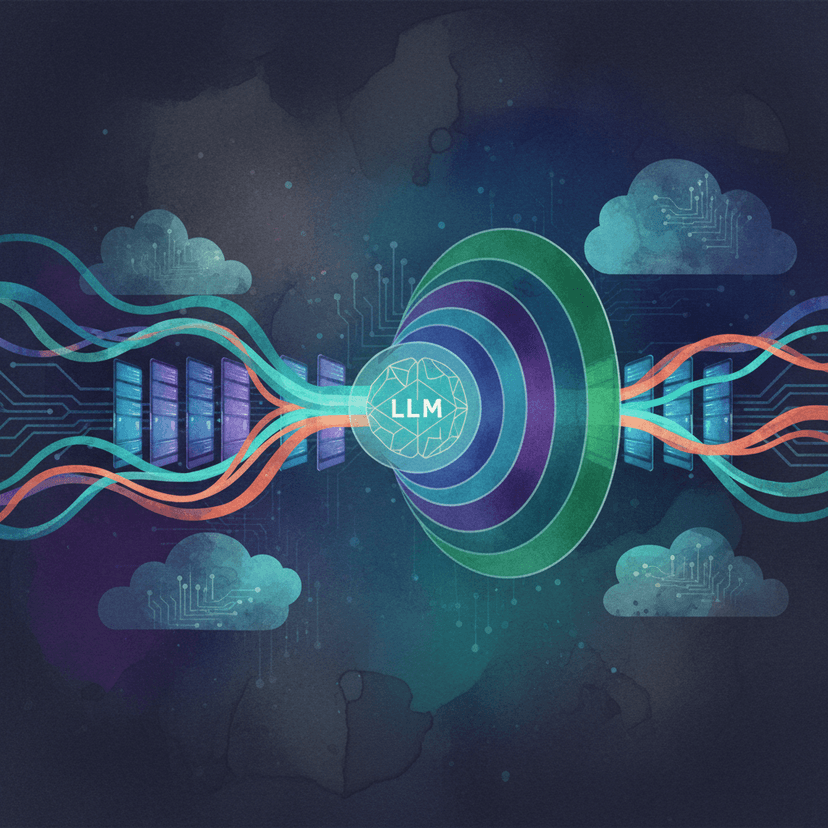
Enterprise AI Agent Deployment: The Infrastructure Playbook for 2026
Deploy AI agents at enterprise scale with proven patterns for security, governance, and reliability. Learn from real implementations across Fortune 500 companies.

Enterprise AI agent deployment is fundamentally different from running AI experiments in a sandbox. When NVIDIA announced their Agent Toolkit with 17 enterprise adopters, they weren't just showcasing technology—they were validating infrastructure patterns that work at scale under compliance constraints.
This guide compiles what we've learned deploying AI agents in regulated industries: healthcare, financial services, manufacturing, and government. These aren't theoretical best practices—they're battle-tested patterns from systems processing millions of autonomous decisions monthly.
Why Enterprise AI Agent Deployment is Different
Enterprise deployments face constraints that startups don't:
- Compliance requirements — GDPR, HIPAA, SOC 2, industry-specific regulations
- Security reviews — InfoSec must approve every external API and data flow
- Audit trails — Every decision needs to be explainable months later
- High availability — Downtime measured in revenue lost per minute
- Legacy system integration — Can't rewrite 20-year-old core systems
- Change management — Deployments measured in quarters, not weeks
The technology stack that works for a 10-person startup fails immediately in a 10,000-person enterprise. You need different architecture.
The Enterprise AI Agent Architecture
Successful deployments follow a consistent pattern:
Layer 1: Agent Orchestration Platform
This is your control plane—where agents are defined, deployed, monitored, and governed.
Key components:
- Agent registry — Central catalog of all deployed agents, their capabilities, and owners
- Workflow engine — Orchestrates multi-step agent tasks with error handling
- Permission management — What each agent can access and modify
- Version control — Track changes, enable rollbacks
- Deployment pipeline — Automated testing and staged rollouts
Technology choices:
- Build on workflow platforms: Temporal, Apache Airflow, Prefect
- Or use emerging agent frameworks: LangGraph, AutoGPT, Microsoft Semantic Kernel
- Enterprises often build custom on Kubernetes for full control
Layer 2: LLM Gateway and Routing
Direct API calls to OpenAI or Anthropic create vendor lock-in and cost unpredictability. You need abstraction.
Gateway responsibilities:
- Model routing — Different tasks use different models (GPT-4o for reasoning, GPT-3.5 Turbo for simple classification)
- Cost control — Per-team budgets, automatic downgrade when limits hit
- Caching — Identical prompts return cached responses
- Fallback logic — If primary model is down or slow, route to alternative
- Compliance filtering — Block PII from leaving your infrastructure
- Rate limiting — Prevent runaway costs from bugs
Implementation options:
- Open source: LiteLLM, Portkey
- Commercial: Martian, Kong AI Gateway
- Build your own proxy (surprisingly common for enterprises)
The multi-model approach Microsoft demonstrated with Copilot Cowork is standard for enterprise deployments—you don't want single-vendor dependency when you're processing critical workflows.
Layer 3: Security and Compliance Layer
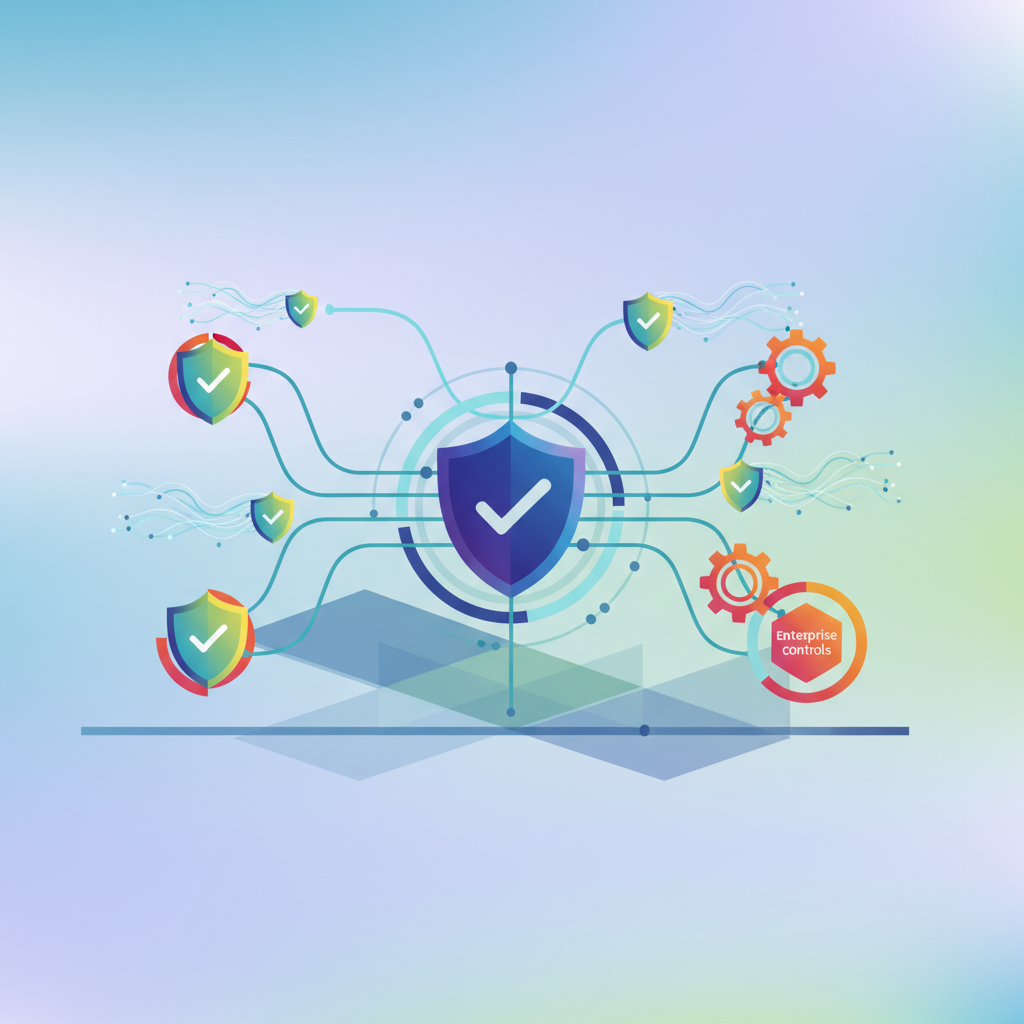
This is where most deployments get stuck in security review for months. Build this upfront.
Security requirements:
- Data classification enforcement — Agents can't access data above their clearance level
- Encryption in transit and at rest — All LLM calls over TLS, all stored context encrypted
- Secrets management — No hardcoded API keys, use vault systems (HashiCorp Vault, AWS Secrets Manager)
- Network segmentation — Agents run in isolated VPCs, no internet access unless explicitly needed
- Input/output filtering — Block prompt injection attempts, sanitize agent outputs
Compliance automation:
- Audit logging — Every agent action logged with timestamps, inputs, outputs, and decision rationale
- Data residency — Route EU user data to EU-hosted models
- Retention policies — Automatic deletion of agent conversations after compliance windows
- Access reviews — Quarterly recertification of agent permissions
Layer 4: Integration and Data Access
Agents need to interact with internal systems. This layer manages that safely.
Integration patterns:
- API Gateway — All internal APIs accessed through a single gateway with rate limiting and authentication
- Read-only by default — Agents get read access first, write access only after validation
- Sandbox environments — Test agent behavior against production clones before going live
- Circuit breakers — Automatically disable agents that are making too many errors
- Data abstraction — Agents query through semantic layers, not direct database access
Common integrations:
- CRM (Salesforce, HubSpot)
- ERP (SAP, Oracle)
- HRIS (Workday, BambooHR)
- Data warehouse (Snowflake, BigQuery)
- Internal tools and APIs
This is where understanding AI automation workflow examples helps—you can pattern match against proven integration architectures.
Layer 5: Observability and Monitoring
If you can't debug agent failures quickly, you'll lose trust and get shut down.
Monitoring requirements:
- Real-time dashboards — Agent activity, success rates, latency, costs
- Alerting — Anomaly detection for unusual behavior (cost spikes, error rate increases)
- Distributed tracing — Track agent workflows across multiple services
- Cost attribution — Which teams/agents are driving LLM costs
- Quality metrics — User satisfaction, task completion rates, escalation frequency
Tools:
- Existing observability: Datadog, New Relic, Grafana
- AI-specific: LangSmith, Helicone, Arize AI
- Build dashboards on top of your LLM gateway logs
Enterprise AI Agent Deployment: Step-by-Step Rollout
Phase 1: Proof of Concept (Weeks 1-4)
Goal: Validate that AI agents can handle a specific use case with acceptable quality.
Scope:
- Single use case (customer support ticket triage, invoice processing, etc.)
- Runs in isolated sandbox environment
- Human-in-the-loop for every decision
- 10-50 test cases
Success criteria:
- 80%+ accuracy compared to human baseline
- Security review identifies no showstoppers
- Stakeholders see value
Phase 2: Pilot Deployment (Weeks 5-12)
Goal: Run in production with real users, limited scope.
Scope:
- 5-10% of traffic for chosen use case
- Full production infrastructure (security, logging, monitoring)
- Human oversight can intervene but doesn't review every action
- Automated alerts for anomalies
Success criteria:
- Zero security incidents
- Cost per action within budget
- User satisfaction equal or better than previous solution
- Clear ROI demonstrated
Phase 3: Scaled Rollout (Months 3-6)
Goal: Expand to 100% of traffic for initial use case, add 2-3 additional use cases.
Scope:
- Full production load
- Multiple agent types running in parallel
- Automated deployment pipeline
- Self-service agent creation for approved patterns
Success criteria:
- Infrastructure scales smoothly
- Cost predictability maintained
- Incident response processes proven
- Business metrics show clear impact
Phase 4: Platform Maturity (Months 6-12)
Goal: AI agents become standard infrastructure, multiple teams deploying independently.
Scope:
- Agents handling 10+ use cases across departments
- Governance model prevents shadow AI while enabling innovation
- Internal documentation and training for agent developers
- Continuous optimization of costs and quality
Success criteria:
- Agents processing >50,000 tasks/month
- Development time for new agents down to days not months
- Executive sponsorship and continued investment secured
Common Enterprise Deployment Pitfalls
1. Skipping Security Review Until Production
Security will shut you down. Involve InfoSec from day one, not week 10.
Solution: Build security requirements into the POC. It's easier to add features later than retrofit security.
2. Treating AI Agents as IT Projects Instead of Product Launches
Agents that users don't trust or understand won't get adopted, no matter how good they are.
Solution: Invest in change management, training, and communication. Make it clear what agents do and don't do.
3. No Cost Governance
LLM costs can spiral fast. One buggy agent making recursive calls can burn thousands in hours.
Solution: Hard limits per agent, automatic shutoff when budgets are exceeded, alerting on unusual patterns.
4. Insufficient Testing Before Production
LLMs are non-deterministic. Edge cases you didn't test will happen in production.
Solution: Build extensive test suites, use evaluation frameworks (RAGAS, TruLens), implement gradual rollouts with easy rollback.
5. Ignoring Legacy System Constraints
Your 20-year-old ERP doesn't have a REST API. Your agents need to work anyway.
Solution: Build adapter layers, use RPA for systems without APIs, accept that some integrations will be messy but functional.
Enterprise AI Agent Deployment Costs
Budget realistically for the full stack:
Initial development (per use case):
- Infrastructure setup: $50,000-$150,000 (one-time platform cost)
- Agent development: $30,000-$100,000 per use case
- Security review and compliance: $20,000-$50,000
- Testing and validation: $15,000-$40,000
Ongoing costs (annual):
- LLM API usage: $50,000-$500,000+ depending on volume
- Infrastructure: $30,000-$100,000 (hosting, monitoring, security tools)
- Maintenance and improvements: $40,000-$120,000 (20% of development cost)
- Team costs: 1-2 FTEs for platform management
Typical ROI timeline:
- Break even: 12-18 months
- Positive ROI: 18-36 months
- Exponential returns: 36+ months as more use cases deployed
The companies getting ROI faster are treating this as platform infrastructure, not one-off projects.
Technology Stack Recommendations
Based on deployments we've seen succeed:
For companies <1,000 employees:
- LLM: OpenAI GPT-4o + Anthropic Claude (via LiteLLM gateway)
- Orchestration: LangGraph or AutoGPT
- Infrastructure: Hosted (Vercel, Railway, or managed Kubernetes)
- Monitoring: LangSmith + Sentry
For companies 1,000-10,000 employees:
- LLM: Multi-model via custom gateway (OpenAI, Anthropic, open source for specific tasks)
- Orchestration: Temporal or Prefect
- Infrastructure: Self-hosted Kubernetes
- Monitoring: Datadog + Helicone
For companies >10,000 employees:
- LLM: Custom gateway with vendor contracts, on-prem models for sensitive data
- Orchestration: Custom platform on Kubernetes or OpenShift
- Infrastructure: Multi-region, multi-cloud for resilience
- Monitoring: Full observability stack (Datadog/New Relic + custom dashboards)
The difference between custom AI agents vs chatbots matters even more at enterprise scale—you need true autonomous systems, not conversation interfaces.
Regulatory Considerations by Industry
Healthcare (HIPAA)
- No PHI in LLM prompts without BAA (Business Associate Agreement)
- All agent actions involving patient data must be auditable
- Model hosting must be HIPAA-compliant (Azure OpenAI, AWS Bedrock, or on-prem)
Financial Services (SOX, FINRA)
- Audit trails for all trading or financial advice decisions
- Models must be explainable (regulators may ask "why did the agent recommend this?")
- Disaster recovery and business continuity plans required
Government (FedRAMP, ITAR)
- Often requires on-premise model deployment, can't use public cloud LLMs
- Security clearances may be needed for team members
- Extensive documentation and approval processes
European Union (GDPR, AI Act)
- Data residency requirements (EU data stays in EU)
- Right to explanation for automated decisions
- High-risk AI systems require conformity assessments
Conclusion: Enterprise AI Agent Deployment in 2026
The technology is ready. The question is whether your organization is ready to deploy it at scale with proper governance, security, and reliability.
The companies winning with enterprise AI agent deployment:
- Start with infrastructure — Build the platform before building agents
- Move fast within guardrails — Security and compliance upfront, then iterate quickly
- Measure everything — Cost, quality, business impact
- Treat it as a product — Not a project with an end date, but ongoing infrastructure
- Build organizational buy-in — Executive sponsorship, cross-functional teams, change management
The window is open right now. In 2-3 years, AI agents will be table stakes, not competitive advantage. The companies deploying production systems today are building expertise and infrastructure that will compound.
Don't wait for perfect. Start with good enough, learn fast, and scale what works.
Build AI That Works For Your Business
At AI Agents Plus, we help companies move from AI experiments to production systems that deliver real ROI. Whether you need:
- Custom AI Agents — Autonomous systems that handle complex workflows, from customer service to operations
- Rapid AI Prototyping — Go from idea to working demo in days using vibe coding and modern AI frameworks
- Voice AI Solutions — Natural conversational interfaces for your products and services
We've built AI systems for startups and enterprises across Africa and beyond.
Ready to explore what AI can do for your business? Let's talk →
About AI Agents Plus Editorial
AI automation expert and thought leader in business transformation through artificial intelligence.