Samsung Galaxy S26 Brings AI Agents to the Mainstream: Gemini, Perplexity, and Bixby, All in One Phone
Samsung's Galaxy S26 series integrates multiple AI agents—Gemini, Perplexity, and upgraded Bixby—into a single consumer device. This isn't just another phone launch. It's the moment AI agents move from enterprise demos to 300 million pockets.
Samsung just launched the Galaxy S26 series, and the headline isn't about the camera or the chip. It's about AI agents. The S26 natively integrates Google's Gemini, Perplexity's search agent, and a significantly upgraded Bixby—all working together in a single consumer device.
This is the inflection point where AI agents stop being enterprise B2B demos and start living in hundreds of millions of consumer pockets. Samsung ships over 300 million devices annually. If even 20% of those run multiple AI agents, we're talking about the largest agent deployment in history.
What Samsung Just Shipped
The Galaxy S26 series features:
- Enhanced AI performance — Improved on-device processing for faster agent responses
- Upgraded Bixby — Rebuilt with multimodal capabilities and deeper app integration
- Gemini integration — Google's latest AI agent embedded directly into the OS
- Perplexity access — Real-time search and research capabilities built-in
- Privacy-first architecture — On-device processing for sensitive tasks
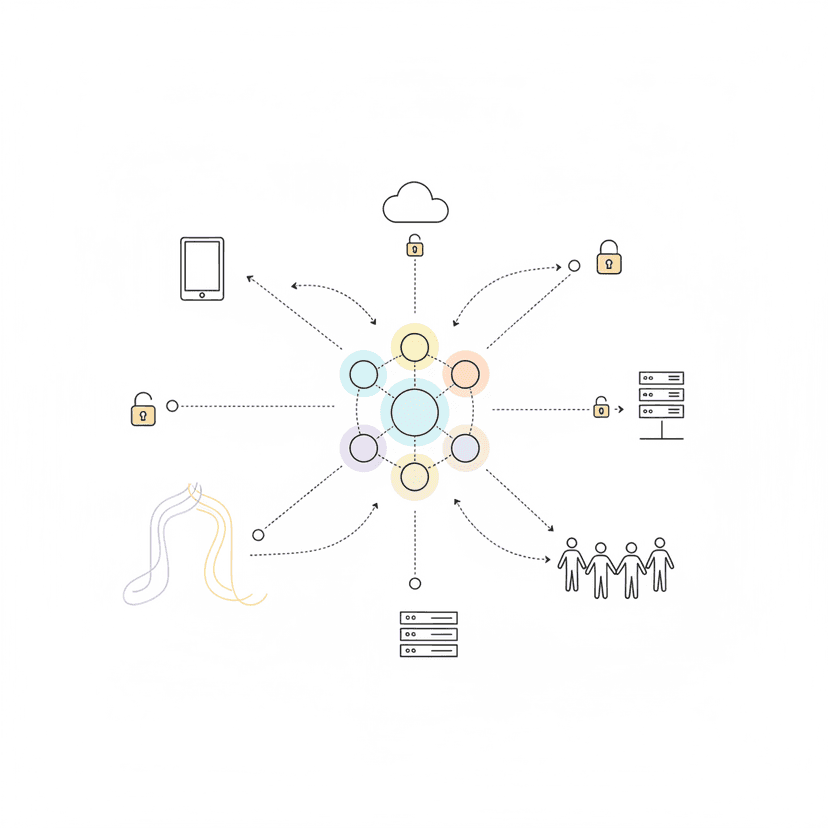
But the real story is how these agents work together. Samsung isn't forcing users to pick one AI assistant. The S26 lets you use Bixby for device control, Gemini for creative tasks, and Perplexity for research—seamlessly switching contexts based on what you're doing.

Why Multi-Agent Consumer Devices Matter
For the past two years, we've watched AI agent demos at tech conferences. Enterprise pilots. Proof-of-concepts. API integrations. All impressive, but contained.
The S26 changes the deployment model entirely:
Scale by default — Samsung doesn't need to convince IT departments or run pilot programs. They manufacture 300 million devices annually. Every S26 ships with three different AI agents pre-installed.
Real-world usage data — Enterprise AI agents often struggle with real-world messy data. Consumer deployments generate usage data at a scale enterprise pilots can't match. Hundreds of millions of people using agents in unpredictable ways will surface edge cases faster than any QA team.
Network effects — When your contact shares a Perplexity search result, or a Gemini-generated image, or a Bixby automation, you're more likely to explore those features yourself. Consumer adoption creates viral loops that B2B deployments don't.
Multi-agent interaction patterns — The S26 forces Samsung to solve a problem most companies are still avoiding: what happens when multiple AI agents need to coordinate on a single task? That coordination layer becomes infrastructure for everyone else.
The Agent Interoperability Problem
Here's what Samsung is quietly solving:
You ask Bixby to "research flights to Berlin and add the best option to my calendar." That requires:
- Bixby interpreting your intent (device-level agent)
- Perplexity searching for flight options (search agent)
- Gemini analyzing your calendar preferences (productivity agent)
- Bixby executing the calendar add (device-level agent)
Four different agents, three different companies, one seamless user experience. That's the hard part.
Most AI agent frameworks assume a single agent per task. OpenAI's Agents API. Anthropic's Claude computer use. LangChain multi-agent systems. They're all designed for coordinated agents within one ecosystem.
Samsung is doing something harder: coordinating agents from competing companies with different APIs, different models, and different privacy policies. If they pull this off, they've built the first real multi-agent orchestration layer at consumer scale.
What This Means For Enterprise AI
If Samsung can make multi-agent coordination work on 300 million consumer devices, here's what that unlocks for enterprise:
-
Specialist agents become viable — Instead of one general-purpose AI assistant, you can deploy specialist agents for finance, HR, legal, and ops—and let them coordinate.
-
API-first agent design — If consumer agents need clean APIs for coordination, enterprise agents will inherit those standards.
-
On-device + cloud hybrid — Samsung's privacy-first approach (sensitive tasks on-device, heavy compute in cloud) becomes the template for regulated industries.
-
Agent marketplace dynamics — Once users expect to choose between multiple agents for different tasks, the enterprise AI market shifts from "which vendor?" to "which combination of specialists?"
The Privacy Angle
Samsung is positioning the S26 as "privacy-first AI," with on-device processing for sensitive tasks. That's not just marketing—it's a direct response to growing concerns about AI data handling.
Here's why that matters:
Regulatory pressure — The EU AI Act, California's AI regulations, and similar frameworks worldwide are pushing for local processing wherever possible. Samsung is building compliance into the hardware.
Enterprise differentiation — When Samsung pitches the S26 to enterprise buyers, "your data never leaves the device" is a compelling security story.
Competitive positioning — Google and Apple are also pushing on-device AI, but Samsung's multi-agent approach gives them a unique angle: you get Gemini's capabilities AND Perplexity's search AND Bixby's device control, all with privacy preserved.
What To Watch Next
The S26 launch raises critical questions for the AI industry:
Will agent coordination standards emerge? — If Samsung, Google, Apple, and Microsoft all build proprietary coordination layers, we're headed for fragmentation. If they converge on shared standards, we get an agent interoperability protocol.
How will performance hold up? — Running three AI agents simultaneously on a phone is computationally expensive. Battery life, latency, and thermal management will determine if multi-agent phones are practical or just impressive demos.
What about agent conflicts? — When Bixby and Gemini give you different answers to the same question, who's right? Consumer devices will surface the "agent disagreement" problem faster than enterprise systems.
Can smaller players compete? — If Samsung, Apple, and Google all ship multi-agent devices, where does that leave startups building single-purpose AI assistants? Either they become specialist plugins, or they get squeezed out.
The Bigger Picture
Samsung's Galaxy S26 isn't just another phone. It's the first major consumer device designed around the assumption that users will interact with multiple AI agents throughout their day.
That assumption changes everything:
- Product design shifts from "single assistant" to "agent orchestration"
- Privacy architecture becomes a competitive advantage
- Developer platforms need to support multi-agent coordination
- User expectations shift from "ask one AI" to "let multiple specialists handle different parts"
For businesses building AI products, the lesson is clear: the future isn't one AI assistant handling everything. It's multiple specialist agents coordinating seamlessly.
Samsung just shipped that future to 300 million people. The rest of the industry has about six months to catch up.
Build AI That Works For Your Business
At AI Agents Plus, we help companies move from AI experiments to production systems that deliver real ROI. Whether you need:
- Custom AI Agents — Autonomous systems that handle complex workflows, from customer service to operations
- Rapid AI Prototyping — Go from idea to working demo in days using vibe coding and modern AI frameworks
- Voice AI Solutions — Natural conversational interfaces for your products and services
We've built AI systems for startups and enterprises across Africa and beyond.
Ready to explore what AI can do for your business? Let's talk →
About AI Agents Plus Editorial
AI automation expert and thought leader in business transformation through artificial intelligence.